
Imagine waking up on a Sunday morning in a room filled with nothing but soft natural light and the things you truly love. No piles of laundry on the chair, no cluttered nightstands, and no mental “to-do” list triggered by the mess. This isn’t just a Pinterest dream—it’s the reality of a minimalist lifestyle.
In 2026, as our digital and physical worlds become increasingly noisy, minimalism has evolved from a niche design trend into a vital survival strategy for the modern soul. But what is a minimalist lifestyle exactly? It’s not about living in a cold, empty box; it’s about intentionality. It’s the art of removing the “static” so you can finally hear the music of your own life.
What is a Minimalist Lifestyle? Understanding Intentional Living
To many, the word “minimalism” sounds like a sacrifice. In reality, it is a massive gain. A minimalist lifestyle is a tool used to rid yourself of life’s excess in favor of focusing on what’s important.
- The Modern Definition: It is the intentional promotion of the things we value most and the removal of everything that distracts us from them.
- Quality Over Quantity: It’s choosing one high-quality linen sofa over three cheap, fast-furniture pieces that will end up in a landfill in two years.
- Focus on Experiences: Shifting your “reward system” from buying things to doing things.
The Life-Changing Minimalist Lifestyle Benefits
Why are so many people making the switch? Because the minimalist lifestyle benefits are backed by both psychological research and financial reality.
1. Mental Clarity and Reduced Stress
A landmark study from UCLA’s CELF found a direct link between high “object density” in a home and elevated levels of cortisol (the stress hormone). When you embrace minimalism, you aren’t just cleaning a room; you are lowering your body’s stress response.
2. Financial Freedom
Everything you own has a “hidden cost”—the cost of storage, the time spent cleaning it, and the mental energy spent worrying about it. By adopting a minimalist mindset, most households save between 15% and 30% of their monthly discretionary income simply by pausing before a purchase.
3. More Time for What Matters
The average person spends 5,000 minutes a year looking for lost items. In a minimalist home, everything has a home. That’s nearly 80 hours a year you get back for hobbies, family, or rest.
How to Start a Minimalist Lifestyle: A Room-by-Room Guide
Starting can feel overwhelming, but the secret is to focus on surfaces first. Clear surfaces provide immediate visual relief.
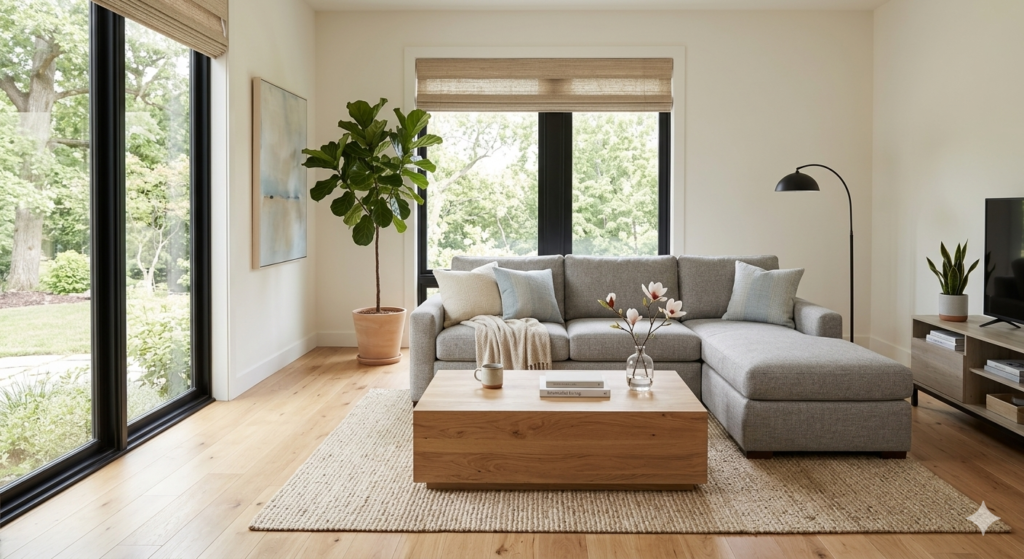
Step 1: The Living Room (The Sanctuary)
The living room should be a place for connection, not a storage unit for old magazines and unused gadgets.
- The 90/90 Rule: If you haven’t used an item in 90 days and won’t use it in the next 90, it’s time to let it go.
- The “Anchor” Strategy: Choose one or two bold pieces of art or furniture and let the rest of the room “breathe” with negative space.
Step 2: The Minimalist Kitchen (The Tool Box)
A kitchen should function like a well-oiled machine.
- The Duplicate Audit: You don’t need four different sized colanders. Keep the best one.
- Clear Countertop Policy: If a gadget isn’t used every single day (like a toaster), store it inside a cabinet. The visual calm will change how you feel about cooking.
Step 3: The Bedroom (The Sleep Haven)
Your bedroom is for two things: sleep and intimacy.
- The Color Palette: Stick to neutrals—whites, beiges, and soft greys.
- The Tech Ban: Remove TVs and computers. Minimalism in the bedroom is the ultimate “sleep hygiene” hack.
Comparison: Minimalism vs. Consumerism
| Feature | Consumerist Lifestyle | Minimalist Lifestyle |
| Purchasing | Impulse-driven, “Sale” focused | Intentional, “Need” focused |
| Home Feel | Cluttered, overwhelming | Calm, spacious |
| Maintenance | High (more things to clean/fix) | Low (less to manage) |
| Budget | Often stretched by “wants” | High savings potential |
Pro Tips for Maintaining the Momentum
- The “One In, One Out” Rule: For every new item you bring into your home, one must leave. This prevents “clutter creep.”
- Digital Minimalism: Your phone is part of your environment. Delete unused apps, turn off non-essential notifications, and clear your desktop every Friday.
- The 30-Day Rule: For non-essential purchases, wait 30 days. If you still want it (and have a place for it), buy it. Most of the time, the urge fades.
FAQ: Common Questions About Minimalist Living
What is a minimalist lifestyle exactly?
It is the practice of living with only the things you need and that bring you value. It is a tool to rid yourself of excess so you can focus on happiness and fulfillment.
Does minimalism mean I have to have an empty house?
Absolutely not! Minimalism looks different for everyone. For a book lover, it might mean a curated library of 50 favorite books instead of 500 unread ones. It’s about curation, not deprivation.
How do I deal with sentimental items?
This is the hardest part. Try the “Photo Method”: Take a high-quality photo of the item. Often, we want the memory, not the physical object. The photo keeps the memory alive without taking up shelf space.
Conclusion: Your Path to a Lighter Life
Embracing a minimalist lifestyle isn’t a weekend project; it’s a lifelong journey of choosing “better” over “more.” The minimalist lifestyle benefits—from lower stress to higher bank balances—are waiting for you on the other side of that first bag of donations.
My Gentle Advice: Start small. Pick one drawer. One shelf. One corner. Feel the immediate lightness that comes with a clear space. Once you taste that freedom, you won’t want to go back.