
There’s a particular kind of Sunday afternoon dread that sets in when you look around and realize the house needs cleaning — again. Not because you didn’t clean last week, but because it always needs cleaning, and the list of things that need doing is somehow never shorter than the week before.
The problem isn’t that you’re not cleaning enough. It’s that without a system, every cleaning session starts from scratch. You spend time figuring out what needs doing, get tired before you finish, and the next week the same tasks are waiting in the same places. It’s not a motivation problem. It’s a structure problem.
The solution is a cleaning schedule that distributes the work across the week and month so that no single session is overwhelming, every task gets done at the right frequency, and the house maintains a baseline level of clean without requiring a full-day marathon every time. This guide gives you that system — a complete house cleaning checklist organized by daily, weekly, monthly, and seasonal tasks, with the reasoning behind the structure and the habits that make it actually stick.
Key Takeaways
- A 2019 study published in the British Journal of Sports Medicine found that household cleaning and tidying activities contribute meaningfully to daily physical activity and stress reduction — a clean home isn’t just aesthetic, it’s a health outcome.
- The most effective cleaning systems distribute tasks across daily, weekly, monthly, and seasonal intervals — not because of arbitrary scheduling, but because different surfaces accumulate dirt at genuinely different rates.
- The biggest reason cleaning schedules fail isn’t lack of time — it’s that tasks are grouped into one overwhelming session rather than distributed across the week in manageable pieces.
- A daily cleaning routine that takes 15–20 minutes prevents the accumulation that leads to 3-hour deep cleaning sessions every few weeks.
- Rooms used most frequently (kitchen, bathroom) need the most frequent attention; rooms used least frequently (guest room, basement) can be addressed monthly or seasonally.
Why a Cleaning Schedule Works Better Than Cleaning “When It Needs It”
Most people clean reactively — when things get visibly dirty, when guests are coming, or when the mess becomes impossible to ignore. This approach has a predictable result: the house cycles between barely acceptable and genuinely overwhelming, with large cleaning sessions that feel like punishment.
A scheduled cleaning system changes the dynamic in one specific way: tasks happen before they become problems, which means they take less time and effort at each interval.
Wiping down a kitchen counter daily takes 90 seconds. Scrubbing a counter that’s accumulated a week of cooking residue takes 10 minutes. The total time investment for daily cleaning is dramatically lower than for weekly deep cleaning of the same surface — and the house never reaches a state that feels overwhelming.
The schedule also removes decision-making from the cleaning process. When the question isn’t “what needs to be cleaned?” but simply “it’s Tuesday, so I do the bathroom,” the mental overhead disappears and the task gets done with less resistance.
Daily Cleaning Checklist: 15–20 Minutes That Prevent the Buildup
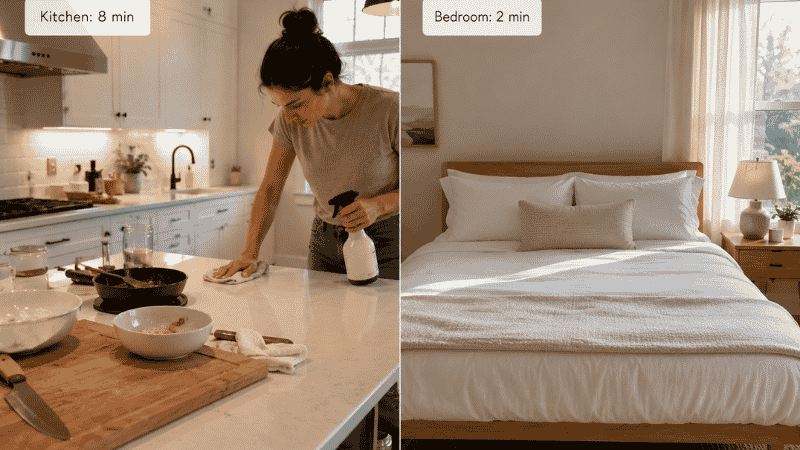
These are the tasks that, done daily, prevent every other cleaning task from becoming harder. Skip them for a few days and you’ll feel the compound effect immediately.
Kitchen (8–10 minutes)
- Wipe down counters and stovetop after cooking or after the last meal of the day
- Wash dishes or run the dishwasher — no dishes in the sink overnight
- Wipe out the sink and dry the faucet (prevents water spots and bacterial growth)
- Sweep or quick-sweep the kitchen floor (particularly important if you have children or pets)
- Return all items to their designated storage locations
Living Areas (3–5 minutes)
- Return items that have migrated from other rooms to their correct locations
- Fluff and straighten couch cushions and throws
- Clear any surfaces that accumulated items during the day — coffee table, side tables, entry area
Bedroom (2–3 minutes)
- Make the bed in the morning (research from the National Sleep Foundation suggests bed-making correlates with better sleep quality and a more positive start to the day)
- Put clothing directly in the hamper or on designated hooks — not on the floor or chair
Bathroom (2–3 minutes)
- Wipe down the sink and counter after morning and evening routines
- Hang towels properly to dry (prevents mildew)
- Do a quick toilet wipe with a disinfecting wipe
Editor’s note: The daily checklist looks like a lot written out, but in practice it’s a series of 30-90 second tasks done as part of existing routines — wiping the counter after cooking, making the bed after getting up. The actual additional time is closer to 10 minutes when built into transitions you’re already making.
Weekly Cleaning Schedule: Room by Room
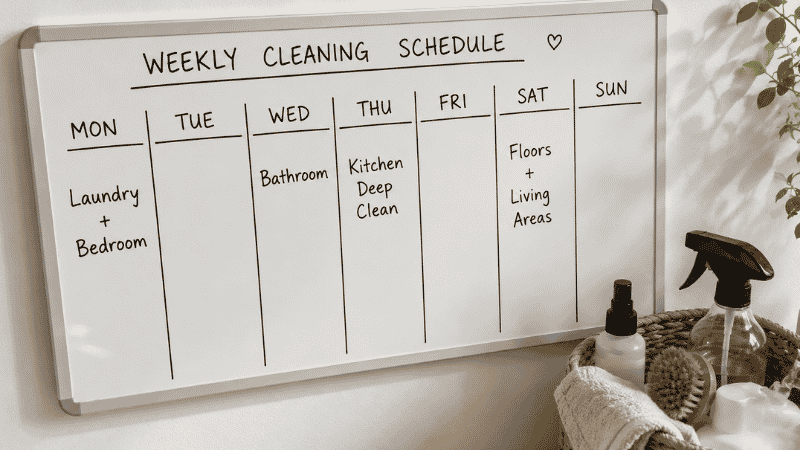
The weekly cleaning schedule handles the tasks that accumulate at a pace of once per week — floors, bathroom deep clean, laundry, surfaces that don’t need daily attention.
Monday: Laundry and Bedroom Reset
Starting the week with laundry means clean clothes are available for the week and the bedroom gets a full reset after the weekend.
- Strip and wash bed linens (weekly linen washing is the standard recommendation for hygiene)
- Do all household laundry — wash, dry, fold, and put away in the same session where possible
- Dust bedroom surfaces — nightstands, dresser top, any shelving
- Vacuum or sweep bedroom floor including under the bed
- Organize the closet floor — return shoes and items that have accumulated over the week
Tuesday or Wednesday: Bathroom Deep Clean
Bathrooms need more thorough weekly cleaning than the daily wipe-down handles.
- Scrub the toilet — bowl, seat, exterior, and base
- Clean the sink and faucet thoroughly with appropriate cleaner
- Clean the shower or bathtub — walls, floor, and fixtures
- Wipe down the mirror
- Mop or scrub the bathroom floor
- Replace towels and bath mat with fresh ones
- Restock toiletries and paper products
Thursday: Kitchen Deep Clean
Beyond the daily counter wipe, the kitchen needs weekly attention to surfaces that accumulate grease and residue.
- Clean the stovetop thoroughly — grates, burner areas, control knobs
- Wipe down the exterior of all appliances — microwave, refrigerator, dishwasher
- Clean the inside of the microwave
- Wipe cabinet fronts near high-use areas (handles especially)
- Mop the kitchen floor
- Empty and wipe down the trash can
- Check the refrigerator for expired items — a weekly fridge scan prevents forgotten food and odors
Friday or Weekend: Living Areas and Floors
- Dust all surfaces throughout the living areas — shelves, entertainment units, window sills, ceiling fan blades
- Vacuum all upholstered furniture
- Vacuum all carpeted floors
- Mop all hard floors
- Clean glass surfaces — windows, mirrors, glass tables
- Tidy entryway — shoes, bags, coats, mail
Monthly Cleaning Checklist: The Tasks Most People Forget
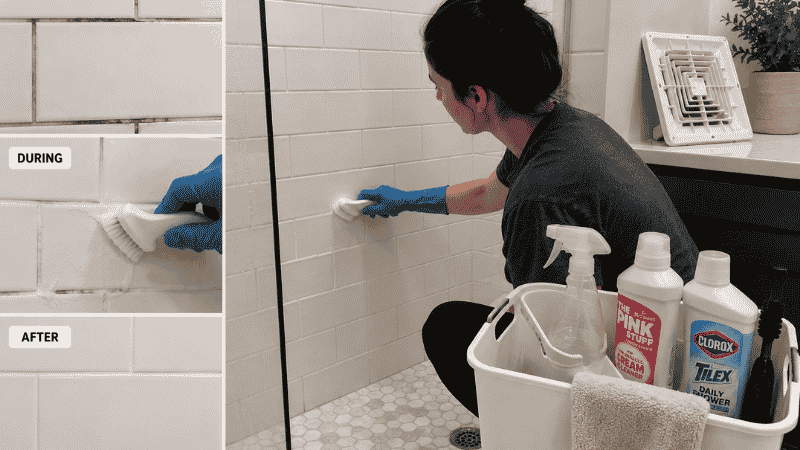
Monthly tasks address areas that accumulate slowly but become significant problems if ignored for months or years. These aren’t visible in daily life, which is exactly why they need a scheduled reminder.
Kitchen
- Clean the inside of the oven (or use self-clean cycle)
- Defrost the freezer if needed and check for forgotten items
- Clean behind and under the refrigerator — dust accumulates on coils and reduces efficiency
- Descale the coffee maker and kettle
- Clean out the pantry — check dates, consolidate partial packages, wipe shelves
- Wash reusable grocery bags
Bathrooms
- Scrub grout lines on tile surfaces
- Clean the exhaust fan cover — removes dust buildup that reduces air circulation
- Wash shower curtain and liner
- Descale showerheads if you have hard water (soak in white vinegar)
- Check and replace any low toiletries, medications for expiry
Bedrooms
- Wash pillows and duvet inserts (most are machine washable)
- Flip or rotate the mattress if applicable
- Vacuum the mattress surface
- Clean under furniture — accumulated dust under beds affects air quality
- Organize closet — seasonal review of what’s being worn vs. what’s taking up space
Living Areas
- Vacuum upholstered furniture thoroughly including under cushions
- Dust light fixtures and ceiling fans
- Clean window treatments — shake out curtains, wipe blinds
- Wipe down baseboards
- Clean light switches and door handles (high-touch surfaces)
- Check and replace any burned-out light bulbs
Whole House
- Test smoke and carbon monoxide detectors — press the test button
- Clean air vents and replace HVAC filter if needed (typically every 1–3 months depending on filter type and household)
- Wipe down all interior doors, handles, and light switches
- Clean windows inside and out
Spring Cleaning Checklist: The Annual Deep Reset
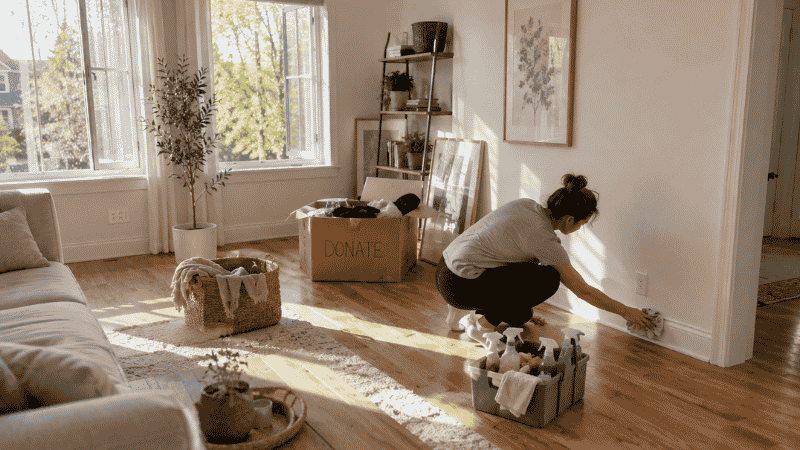
Spring cleaning (or a seasonal deep reset done once or twice yearly) handles the tasks that are too infrequent for the monthly schedule but too important to ignore indefinitely.
Whole House
- Deep clean behind and under all large furniture
- Wash all windows and window tracks
- Clean all light fixtures — remove and wash shades and covers
- Descale and deep clean all appliances
- Check caulking in bathrooms and kitchen — regrout or recaulk if needed
- Donate or discard items accumulated since the last seasonal review
Kitchen
- Empty and deep clean all cabinets and drawers — wash the interiors, check for expired items
- Clean the range hood and filter
- Descale the dishwasher
Bedrooms
- Rotate seasonal wardrobes — pack away off-season clothing
- Wash all bedding including comforters, mattress pads, and pillows
- Clean window treatments thoroughly
Outdoor Areas
- Clean patio furniture and outdoor areas
- Check and clean gutters
- Wash exterior-facing windows
Cleaning Schedule for Home: How to Build the Habit
Having a checklist is step one. Actually doing it consistently is the step that most people struggle with — and the reason most cleaning schedules get abandoned within a month.
Anchor Tasks to Existing Routines
The most reliable way to build a cleaning habit is to attach it to something you already do automatically. Making the bed happens right after getting up. Wiping the counter happens after cooking. Starting the dishwasher happens after the last meal. The task rides the momentum of an existing habit rather than requiring a separate decision.
Start Smaller Than You Think You Need To
Most new cleaning schedules fail because they’re too ambitious for the current reality. If you’re starting from a baseline of cleaning once every two weeks, a full seven-day weekly schedule will collapse within days. Start with daily kitchen and bathroom wipe-downs only. Do that for two weeks until it’s automatic. Then add one weekly task. Gradual accumulation builds sustainable habits; ambitious overhauls create burnout.
The Weekly Reset Appointment
Treat your weekly deep-clean tasks as a scheduled appointment — same time each week, non-negotiable. Saturday morning, Sunday afternoon, Friday evening — whatever works for your schedule. The consistency matters more than the timing.
How to Keep House Clean With Kids
Households with children have additional cleaning demands and additional sources of help. Age-appropriate cleaning tasks for children — putting away their own toys, making their bed, wiping down their bathroom sink — build habits and reduce the parental load simultaneously. The key is making the tasks genuinely manageable for the child’s age rather than expecting adult standards from a seven-year-old.
Declutter Checklist: Before the Cleaning System Can Work
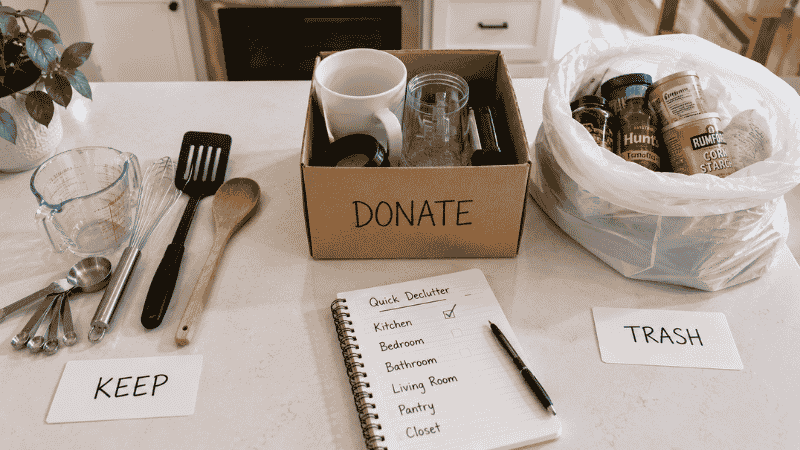
A cleaning schedule only works if there’s an underlying organization system supporting it. A home where items don’t have designated locations will never stay clean regardless of how often it’s cleaned — surfaces accumulate because there’s nowhere for things to go.
Before implementing a cleaning schedule, do a room-by-room declutter pass:
Quick declutter checklist by room:
Kitchen: Expired pantry items, duplicate tools, appliances not used in 12 months, mismatched containers
Bedroom: Unworn clothing (12-month rule), shoes in poor condition, items that don’t belong in a bedroom
Bathroom: Expired products, duplicate items, products you’ve stopped using
Living areas: Items without a real home, decor you no longer actively like, accumulated mail and papers
General: Anything broken, anything duplicated unnecessarily, anything kept from guilt rather than use
A decluttered home is dramatically easier to clean and dramatically easier to keep clean — because every surface has breathing room and every item has a home to return to.
If You Only Have 10 Minutes Right Now
10 minutes: Do the kitchen daily checklist only. Wipe the counter, do the dishes, sweep the floor. A clean kitchen resets the feeling of the whole house and gives you momentum for everything else.
20 minutes: Add the living area reset to the kitchen tasks. Clear all surfaces, return misplaced items, straighten the couch. Two rooms done in 20 minutes demonstrates what a daily routine can accomplish.
30 minutes: Complete the full daily checklist across all rooms. This is the baseline that, done every day, prevents the overwhelming sessions that make cleaning feel like punishment.
FAQ: House Cleaning Checklist
How often should you clean your house? Daily light cleaning (15–20 minutes) prevents buildup. Weekly room-specific deep cleaning (30–60 minutes total across the week) handles what daily cleaning misses. Monthly tasks address slower-accumulating areas. This three-tier approach keeps any home consistently clean without marathon sessions.
What is a good weekly cleaning schedule? A sustainable weekly schedule distributes rooms across the week: bedroom and laundry on Monday, bathroom deep clean mid-week, kitchen deep clean later in the week, floors and living areas on the weekend. Each day’s tasks take 20–30 minutes rather than requiring a full free day.
What should be on a spring cleaning checklist? Spring cleaning covers the annual tasks too infrequent for the monthly schedule: deep cleaning behind and under all furniture, washing all windows and window tracks, cleaning all light fixtures, descaling appliances, rotating seasonal wardrobes, and donating or discarding items accumulated over the year.
How do I keep my house clean when I’m busy? Anchor cleaning tasks to existing routines (wipe the counter after cooking, make the bed after getting up) so they require no separate time slot. Prioritize the kitchen and bathroom daily — these two rooms have the highest impact on overall cleanliness. Accept that some weeks the weekly schedule won’t be fully completed, and resume the next week without guilt.
What’s the fastest way to clean a house? Room by room rather than task by task — complete everything in one room before moving to the next. Start with the rooms that have the most visual impact (kitchen, main bathroom, living room). Skip perfectionism on the first pass — surface clean quickly, then go back for detail if time allows. Having supplies in each room rather than carrying a caddy from room to room saves significant time.
How do I create a cleaning schedule that I’ll actually stick to? Start with less than you think you need — daily kitchen and bathroom only for the first two weeks. Add tasks gradually after each routine becomes automatic. Schedule weekly deep-clean tasks as fixed appointments rather than “whenever I have time.” Accept imperfect weeks as normal rather than treating them as failures.
How do I get my family to help with cleaning? Assign specific tasks by room or by day rather than asking for general help — specificity removes the “I didn’t know what to do” excuse. Make tasks age-appropriate for children. Post the cleaning schedule visibly so responsibilities are shared and visible. Acknowledge contributions specifically rather than generally.
Start With Today’s Daily Checklist
The cleaning schedule in this guide works — but only if it starts. Not next Monday, not after the big declutter, not when things settle down. Today, with the daily checklist. The kitchen counter, the dishes, the bed.
A clean home isn’t built in a single marathon session. It’s built in fifteen minutes daily, thirty minutes weekly, maintained by habits that take less effort than the mess they prevent.
Start with today. The rest follows.
Explore more on Vomoxs:
- How to Declutter Your Home: A Room-by-Room Guide for When You Don’t Know Where to Start
- Pantry Organization Ideas: How to Organize Your Pantry So You Can Actually Find Everything
- Home Organization Ideas: The Complete Room-by-Room Guide
References
- Cheval, B., et al. (2019). Relationships Between Objectively Measured Physical Activity and Sedentary Time and All-Cause Mortality. British Journal of Sports Medicine, 55(12). Research on household activity and health outcomes.
- Saxbe, D. E., & Repetti, R. (2010). No Place Like Home: Home Tours Correlate With Daily Patterns of Mood and Cortisol. Personality and Social Psychology Bulletin, 36(1), 71–81.
- National Sleep Foundation (2022). Bedroom Environment and Sleep Quality Survey. Research on bed-making habits and sleep quality correlation.
Category: Decluttering & Reset | Reading time: 11 min | Last updated: 2026