
There is a profound, often overlooked relationship between the cadence of our mornings and the quiet geography of our closets. For many, the closet is the true “first room” of the day—a private backstage where we transition from the softness of sleep to the readiness of the world.
When that space is a tangle of mismatched hangers, shadowed corners, and forgotten hemlines, the day begins with a subtle, persistent note of friction. But imagine, instead, sliding open a door to “visual silence.” A sanctuary where a linen blazer has the room to hold its shape and a silk slip hangs without the threat of a snag. Transforming your wardrobe with a thoughtfully curated closet organizer is far more than a task of tidying; it is an act of environmental self-care. It is about shifting from a mindset of mere storage to one of a personal boutique.
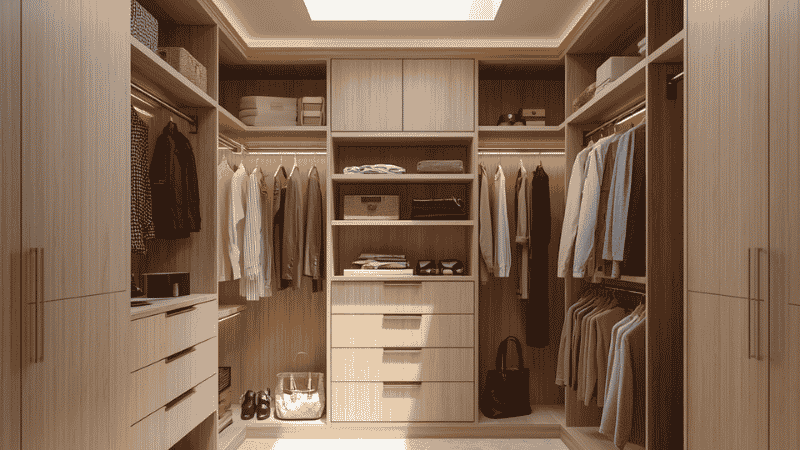
Designing for the Modern Professional and the Capsule Curator
In an era defined by the “less but better” philosophy, our storage needs have moved beyond the cavernous toward the precise. A modern lifestyle demands a closet that mirrors our values: efficiency, material integrity, and a certain aesthetic grace. We no longer want to hide our lives behind closed doors; we want to organize them so they can be lived more fully.
For the modern professional, a closet must facilitate a “frictionless morning.” This is the luxury of knowing exactly where the charcoal cashmere sits, bathed in soft, high-CRI lighting that reveals true color. For the capsule curator, it is about a layout that honors texture—the weight of raw denim against the lightness of poplin.
By integrating a modular closet organizer, you create an adaptable framework that evolves alongside your personal style, ensuring the architecture of the space never dictates the limits of your wardrobe. To further refine your home’s flow, consider how these minimalist design styles can extend from your dressing room to your living sanctuary.
What Most Minimalist Guides Get Wrong
Most organization advice operates on a binary: you either have an empty closet or a messy one. They suggest “purging” until your life fits into a single box, but real life—with its changing seasons, evening galas, and professional requirements—is rarely that simple.
High-end minimalism isn’t about the absence of things; it is the presence of order. Most guides miss the “active life” factor—the need for a space to put a blazer you’ve worn for three hours that isn’t ready for the dry cleaner but shouldn’t touch your fresh linens. True organization requires a “transitional zone,” a design detail that acknowledges how we actually live in our clothes.
The Rule of Thirds: A Study in Balance and Proportion
Refined closet design is an exercise in balance. It relies on the “Rule of Thirds” to ensure the space feels like a curated gallery rather than a crowded stockroom.
The Hanging Tier
This is the vertical heart of the closet. The secret to an elevated look is rhythmic uniformity. Replacing disparate plastic hangers with slim velvet or solid FSC-certified wood immediately lowers the “visual noise,” allowing the eye to focus on the clothing itself.
The Shelving Tier
A home for the tactile—the heavy knits, the structured handbags, the Italian leather. Here, proportion is everything. Using linen-weave bins or discreet acrylic dividers maintains the architectural line of a stack, preventing the “topple effect” that shatters the room’s composure.
The Hidden Tier (Drawers)
Every sanctuary needs a place for the unseen. Drawers provide the necessary “white space,” tucking away the essential chaos of hosiery and accessories behind sleek, soft-close fronts. This preservation of the visual field is what separates a functional closet from a luxurious one.
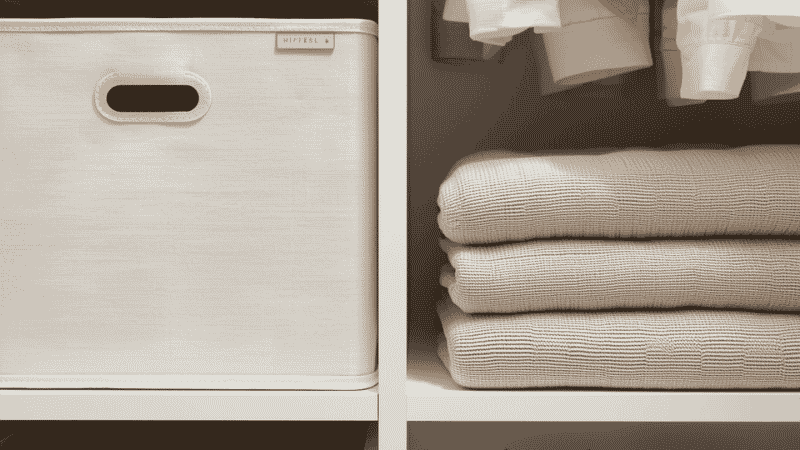
Key Pieces to Achieve This Look
Achieving a high-end boutique feel requires specific “Design Language.” When selecting your closet organizer components, look for these foundational elements:
- Integrated Illumination: Motion-sensor LED strips with a warm color temperature (2700K-3000K) transform a dark alcove into a high-end display.
- Acoustic Softness: Choose drawers with soft-close glides and bins lined with felt or linen to dampen the sound of morning movement.
- Modular Verticality: Systems that utilize the full height of the wall (floor-to-ceiling) maximize volume without encroaching on the floor’s footprint.
- Uniform Hardware: Consistent finishes—such as brushed champagne gold or matte black—across rods and pulls create a cohesive, architectural narrative.
Living Scenarios: The Logic of Real Homes
The 4-Foot Reach-In Rescue
Maya, a creative director in a high-rise apartment, lived with a standard 4-foot reach-in closet that felt more like a dark cave than a dressing area.
- The Solution: We bypassed the single-rod tradition for a floor-to-ceiling modular closet organizer featuring a central stack of drawers flanked by double-hanging tiers.
- The Design Insight: By elevating her accessories into drawers and doubling the hanging capacity, we cleared the floor entirely. This exposure of the floorboards created an immediate “expansion” of the room’s volume.
The “In-Between” Zone
David found himself plagued by the “bedroom chair”—that purgatory for blazers that weren’t quite ready for the laundry.
- The Solution: We integrated a “transitional zone” featuring a valet rod and open, breathable wooden cubbies within his system.
- The Design Insight: This small, intentional carve-out gave his half-worn items a dignified home. For more on maintaining this balance, see our furniture tips for small bedrooms.
The Unspoken Mistakes: When “Organized” Lacks Intuition
- The Trap of the “Aesthetic” Bin: If a bin is too deep, it becomes a graveyard. Always prioritize “visual access”—ensure you can see the edge of what you’ve stored.
- Ignoring Breathing Room: Luxury design breathes. Aim for 80% capacity; that remaining 20% is the “negative space” that prevents garments from crushing one another.
- Material Friction: Wire shelving is the enemy of fine fabric. To achieve a premium feel, opt for solid surfaces like wood or textured laminates that soften the sound of your routine.
Frequently Asked Questions
How do I navigate a deep closet without losing items to the back? The solution is a commitment to “gliding” mechanics. Replace static shelves with pull-out trays or full-extension drawers to bring the contents of the closet out into the light.
Wood vs. Wire: Where should I invest? If your goal is an elevated lifestyle, wood or high-quality composite is the only answer. It provides the structural integrity and thermal warmth that wire lacks.
What are the most elegant options for renters? Seek out freestanding, high-gauge metal wardrobes with a minimalist, boutique-inspired silhouette. They act as “movable architecture” that can travel with you.
Is color-coding actually sustainable? Strict color-coding often feels like a chore. Instead, try “tonal grouping” within categories (silks, then cottons) moving from light to dark.
How do I handle shoe storage in a small closet? Utilize the “Heel-to-Toe” method on slanted shelves to maximize horizontal space, or use transparent drop-front boxes to stack vertically while maintaining visibility.
The Final Reset
A closet is never just a place to store fabric; it is the container for the person you intend to be today. When you invest in a closet organizer that respects both the architecture of your home and the rhythm of your habits, you are designing for more than just order. You are creating a life of greater intentionality, where every morning begins in a space of quiet, curated ease.