
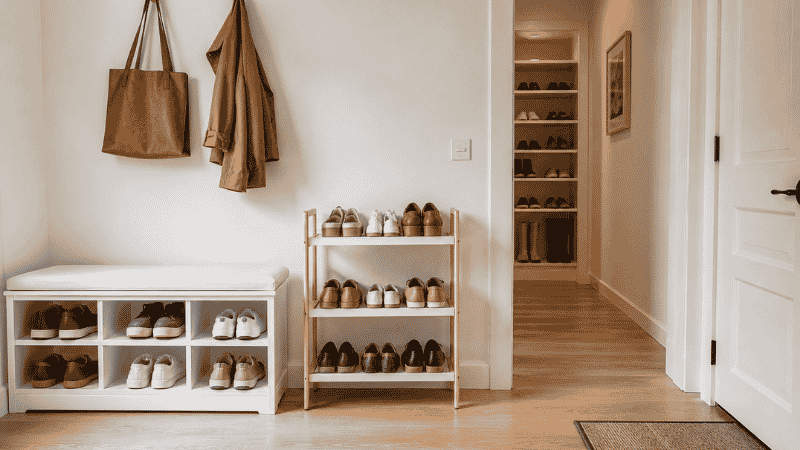
Somewhere between the front door and the closet, shoes develop their own gravitational field. They accumulate by the entrance, migrate under the bed, pile up in the closet corner where they slowly lose their shape. You have a specific pair you want to wear and spend three minutes finding it. You have another pair you forgot you owned until it surfaced during a spring clean.
The problem with shoes is that they’re awkward to store in a way that’s both accessible and space-efficient. They’re oddly shaped, they come in wildly different sizes (heels versus boots versus sneakers), and they’re heavy enough that stacking creates damage. Most shoe storage solutions address one of these problems and ignore the others.
This guide covers shoe storage ideas by space — entryway, closet, bedroom, and small apartments — with specific recommendations for different shoe types, a framework for deciding what to keep, and the maintenance habits that prevent the pile from rebuilding itself. Whether you have 12 pairs or 60, there’s a system here that works for your actual collection and your actual space.
Key Takeaways
- The average American owns 19 pairs of shoes but actively wears 4-5 pairs on a regular basis — meaning most shoe storage problems are also volume problems, not just space problems.
- Shoes stored on the floor lose their shape faster than shoes stored on racks or in boxes, because floor storage puts pressure on the sides rather than distributing weight evenly.
- The most effective shoe storage system organizes by frequency of use, not by type — daily shoes need immediate access, occasional shoes can live in harder-to-reach locations.
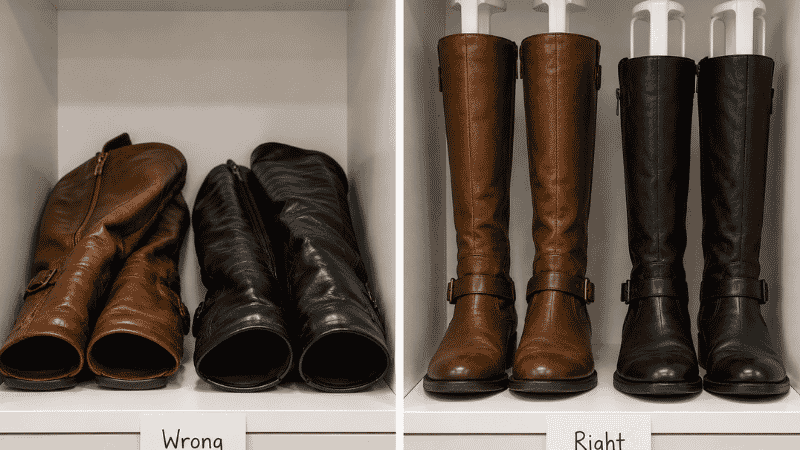
- Boots require dedicated vertical storage to maintain their shape; storing boots on their sides causes permanent creasing of the shaft within weeks.
- A shoe audit — removing pairs you haven’t worn in 12 months — typically reduces the average collection by 30-40%, often eliminating the need for additional storage entirely.
Before You Buy Anything: The Shoe Audit
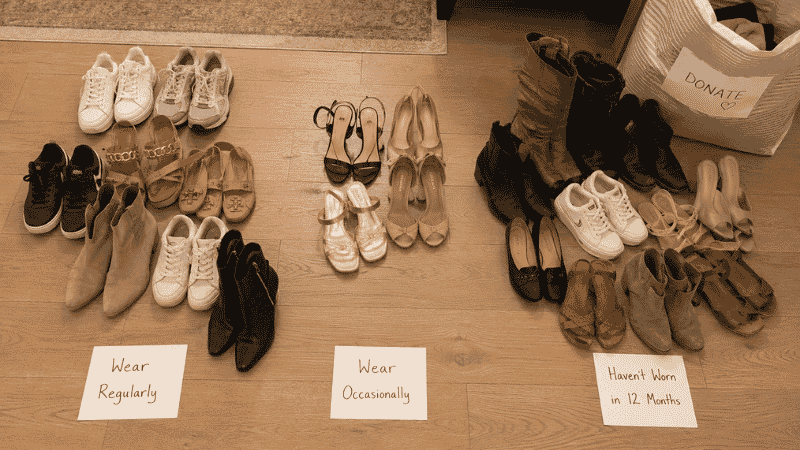
The most common shoe storage mistake is buying more storage before assessing the actual collection. If you own 40 pairs of shoes and your space comfortably holds 25, no amount of clever storage will make that comfortable.
The 12-month rule: Any shoe you haven’t worn in the past 12 months is a candidate for removal. Seasons count — winter boots not worn last winter despite temperatures dropping is a clear answer. The exception is genuinely special occasion shoes (wedding, formal events) that may not come around annually.
The fit and condition check: Shoes that don’t fit well right now — not “when I lose a few pounds” or “when I break them in more” — don’t need to occupy premium storage space. Shoes with worn-down heels, damaged soles, or structural breakdown that you’ve been meaning to repair but haven’t in 6+ months are telling you something.
The duplicate audit: Most people have multiple pairs serving the same function — three pairs of black flats, four pairs of white sneakers, two pairs of brown ankle boots. Keep the best one or two. The others are taking up space that more-worn shoes could use.
Editor’s note: Most people are genuinely surprised by how many shoes they remove in this step. It’s not unusual to go from “I need more storage” to “I have exactly the right amount of storage” purely from a 30-minute audit.
Shoe Storage Ideas for the Entryway
The entryway is where shoe storage has the highest daily impact — this is where shoes come off when you arrive home and go on when you leave. The system here needs to be intuitive enough that everyone in the household uses it automatically, including children and guests.
The entryway shoe storage hierarchy:
Only actively worn, current-season shoes belong in the entryway. Everything else lives elsewhere. If your entryway shoe storage is holding 20 pairs and your household of four realistically wears 2-3 pairs each on a weekly basis, that’s 8-12 pairs that belong in the entryway — not 20.
Shoe Rack Ideas for Entryways
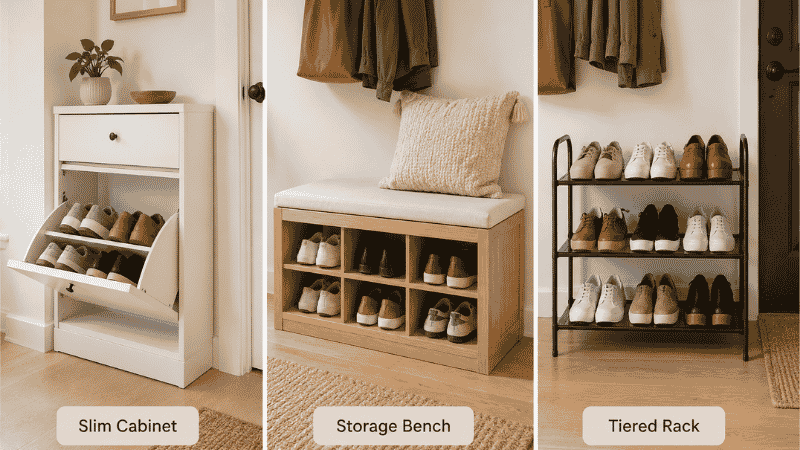
Tiered shoe racks are the most space-efficient open storage option for entryways. A 3-4 tier rack holds 12-16 pairs in a footprint of approximately 20×12 inches — less floor space than a doormat. The trade-off is visibility — shoes are on display, so the rack only looks organized when shoes are consistently returned to it.
For entryways with children: place the lowest tier at a height children can reach independently (12-15 inches from the floor). A rack children can use without help is one they’ll actually use.
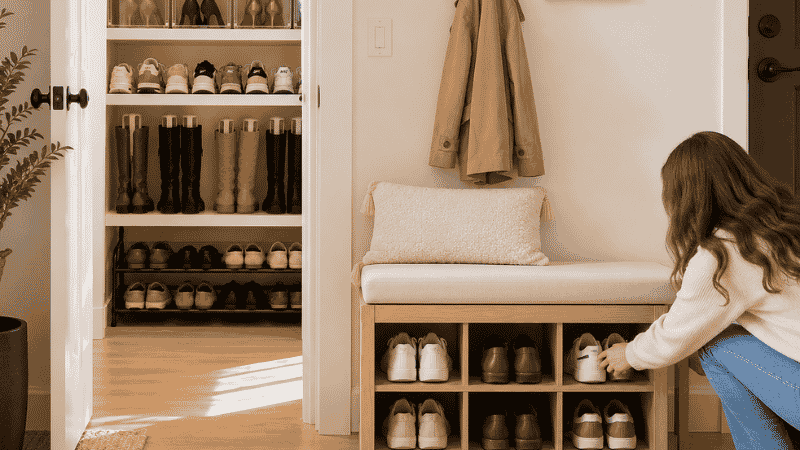
Shoe benches with storage solve two problems simultaneously: a place to sit while putting on shoes, and concealed storage underneath. The bench top keeps the entryway looking tidy regardless of what’s stored below. Bench storage typically holds 6-12 pairs depending on configuration (open shelves vs. closed compartments vs. cubbies).
For shared households: assign each person a designated cubby or shelf section. Physical separation of each person’s shoes prevents the mixing that makes finding a specific pair difficult.
Slim shoe cabinets are the best option for entryways where you want shoes completely out of sight. A standard slim shoe cabinet (12 inches deep, 20-30 inches wide) holds 9-12 pairs behind closed doors in a footprint smaller than a nightstand. The flip-down or pull-out door mechanism keeps the cabinet depth minimal.
Rental-friendly: ✅ All of the above are freestanding, no installation required
Shoe Storage Ideas for Entryway: No-Floor-Space Options
When entryway floor space is genuinely at a premium — narrow hallways, small apartments — wall and door solutions move storage completely off the floor.
Over-door shoe organizers hang over any standard door frame with no installation and hold 12-24 pairs in clear or fabric pockets. For an entryway closet door, this is the most space-efficient option available. The limitation: over-door organizers work better for flats, sandals, and sneakers than for boots or structured heels.
Wall-mounted floating shoe shelves at staggered heights create a display-style storage wall that holds shoes in a minimal floor footprint. Mounting requires wall installation (studs or anchors), which works in owned homes but requires approval in rentals. The look is clean and intentional — almost gallery-like for a curated shoe collection.
How to Organize Shoes in a Closet
Closet shoe storage has a different set of priorities than entryway storage: the closet holds the full collection (not just daily rotation), shoes need to be findable within the closet, and different shoe types need different storage approaches.
How to Store Shoes by Type
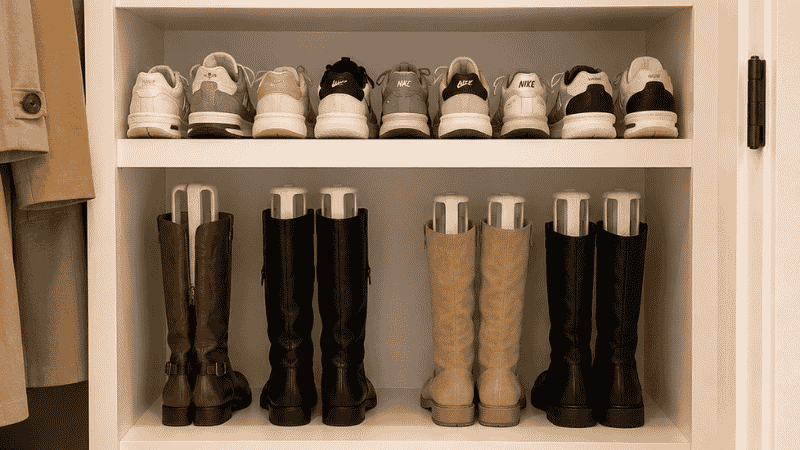
Everyday sneakers and flats: Open shelving or a simple tiered rack works well. These shoes are used frequently, so visibility and accessibility matter more than protection. File them heel-to-toe alternately (one pointing left, one pointing right) to fit more pairs per shelf row.
Heeled shoes and dress shoes: Clear stackable boxes are the gold standard here. They protect the shoe’s shape, keep pairs together, stack efficiently, and allow you to see the shoe without opening the box. A label or photo on the front of the box speeds up retrieval significantly. Heel-down storage prevents the heel from distorting.
Boots: Boots require dedicated vertical storage. Storing boots on their sides causes the shaft to crease and eventually crack. Options in order of effectiveness:
- Boot shapers or rolled magazines inserted into the shaft keep boots standing upright on a shelf
- A dedicated boot rack with individual slots holds each boot vertically
- Hooks on a closet wall or rod hold boot straps vertically
Seasonal shoes: Shoes you wear only in one season (heavy winter boots, summer sandals) don’t need prime closet real estate. Store them in clearly labeled bins on a high shelf, under the bed, or in another storage location, and rotate them at the season change.
Athletic shoes: Sports-specific shoes (running, hiking, court shoes) benefit from open storage rather than boxes — they need to air out between uses. A dedicated lower shelf or a vented bin keeps them accessible while allowing circulation.
How to Organize Shoes in a Small Closet
When the closet is small, every storage decision needs to account for vertical space.
Shelf risers within shoe shelves: A shelf riser on an existing closet shelf creates two levels for shoes in the same vertical space — typically doubling the capacity of that shelf. Each level holds one row of shoes.
The floor of the closet: The closet floor is underused shoe storage in most closets. A tiered floor rack or a simple row of shoes organized heel-to-toe along the floor often holds 6-10 pairs in space that currently holds nothing.
The back of the closet door: An over-door shoe organizer on the inside of a closet door adds capacity that costs no floor or shelf space. This works especially well in small closets where shelf space is maxed out.
Shoe Storage Ideas for Small Spaces and Apartments
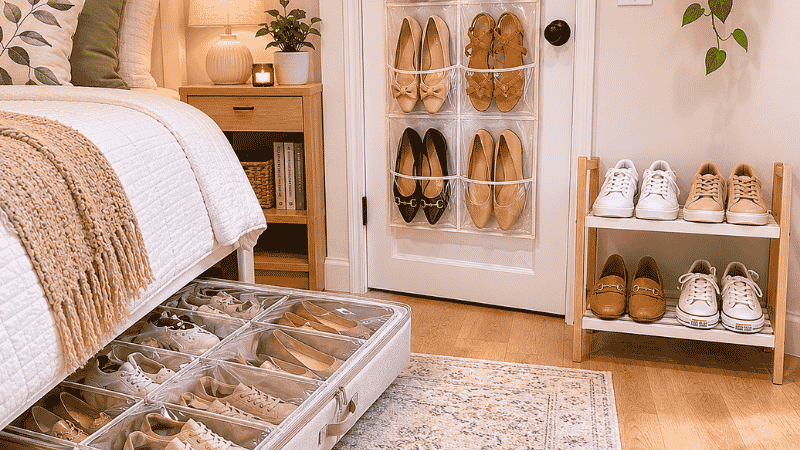
Small apartments present a specific shoe storage challenge: there may be no dedicated closet for shoes at all, and the entryway (if it exists) may be just a small transition zone between the door and the main living space.
Under-bed shoe storage is the most space-efficient option for small apartments. Shallow under-bed shoe organizers with individual compartments hold 12-24 pairs in space that currently holds nothing. Clear-lid versions let you see the shoes without pulling the organizer out completely.
Multi-function furniture: An ottoman with interior storage, a storage bench at the foot of the bed, or a storage coffee table can hold shoes that don’t have dedicated shoe storage space. This works best for shoes used seasonally or infrequently — daily rotation shoes need more accessible storage.
Vertical wall storage: In very small spaces, a wall-mounted pegboard with shoe hooks or a wall-mounted ladder-style shoe rack takes storage entirely off the floor. The visual impact is more substantial than floor storage, so it works best for a curated, aesthetically consistent shoe collection.
The “active rotation” rule for small spaces: In a small apartment, only the shoes you’re actively wearing in the current season live in the main living space. Everything else goes into under-bed storage or another location. This typically means 4-8 pairs accessible and the rest in organized rotation storage.
How to Store Shoes Long Term
Shoes in long-term storage — off-season shoes, special occasion shoes, shoes waiting for a repair — need different care than actively worn shoes.
Clean before storing. Dirt and debris left on shoes during storage can damage the material, attract pests, and cause staining that’s difficult to remove later. A quick wipe-down before storage prevents most long-term damage.
Stuff shoes to maintain shape. For leather shoes, heels, and structured footwear, stuff the toe box with tissue paper or a shoe tree before storing. This prevents the toe from collapsing inward during storage — a form of damage that’s often permanent in leather.
Breathable storage over airtight bags. Shoes need some air circulation during storage. Airtight plastic bags trap moisture that causes mold, odor, and material deterioration. Breathable cotton bags or open boxes are better for long-term storage.
Cedar shoe trees for leather: Cedar naturally absorbs moisture and odor while maintaining the shape of leather shoes. A pair of cedar shoe trees in leather dress shoes or leather boots prevents cracking and keeps them fresh between wearings.
Climate-controlled storage for premium shoes: Heat, humidity, and sunlight all degrade shoe materials over time. For expensive or sentimental shoes, a climate-controlled storage environment (consistent temperature, low humidity, away from direct light) significantly extends their condition.
Why Shoe Storage Systems Fail
If you’ve set up a shoe storage system before and the pile rebuilt itself within a month, it was almost certainly one of these:
The system required returning shoes to a specific spot that wasn’t where people naturally took them off. If shoes come off at the front door but the shoe rack is in the bedroom closet, shoes will pile up at the front door. Storage needs to be where the behavior happens, not where it’s logical to put it.
The system held more shoes than it was designed for. A 12-pair shoe rack jammed with 20 pairs doesn’t function as an organized system — it functions as a structured pile. Every storage solution has a capacity, and that capacity needs to be respected.
There was no daily reset habit. A shoe storage system is maintained by the habit of returning shoes to their spot after wearing them. This takes 30 seconds per pair and is the only thing that keeps any shoe storage system working long-term.
If You Only Have 10 Minutes Right Now
10 minutes: Pull all the shoes from one location — the entryway pile, the closet floor, under the bed — and sort them into three groups: wear regularly, wear occasionally, haven’t worn in 12+ months. Count the “haven’t worn” group. That count tells you whether you have a storage problem or a volume problem.
20 minutes: Clear one storage zone completely. Move all shoes out, clean the shelf or floor, and return only the shoes that belong in that specific zone — daily rotation shoes for the entryway, current-season shoes for the main closet. Return the rest to appropriate seasonal or secondary storage.
30 minutes: Do the full shoe audit. Every pair, every location. The removal pile goes into a bag by the door for donation or disposal. Whatever remains tells you exactly what storage you actually need.
FAQ: Shoe Storage Ideas
What is the best shoe storage for a small space? Under-bed shoe organizers maximize space that’s otherwise unused. Over-door organizers take advantage of door space with no floor or shelf footprint. For the entryway specifically, a slim shoe cabinet holds 9-12 pairs in a 12-inch-deep footprint with shoes completely concealed. The best option depends on your specific space constraints and collection size.
How do I organize shoes in a small closet? Use shelf risers to double your existing shelf capacity, use the closet floor with a tiered floor rack, and add an over-door organizer to the inside of the closet door. Organize by frequency of use — daily shoes at eye level and easiest to reach, occasional and seasonal shoes on higher shelves or further back. Clear stackable boxes for heels and dress shoes keep pairs together and visible.
How should I store boots so they don’t lose their shape? Boots need to stand upright to maintain the shaft shape. Use boot shapers, rolled magazines, or pool noodles cut to length inserted into the shaft to keep them standing. A dedicated boot rack with individual slots is the most elegant solution. Never store boots on their sides — the shaft creases permanently within weeks.
How many shoes should I actually keep? There’s no universal number, but the practical guideline is: keep what you wear regularly, plus a few intentional pairs for specific occasions. If you find yourself unable to see or access shoes because of the volume, that’s a signal to reduce. Most people find their collection naturally stabilizes at a number that fits their storage space once they stop keeping shoes “just in case.”
What is the best shoe storage for entryways? A shoe bench with concealed storage underneath is the most functional entryway option — it provides seating for putting shoes on and off, holds 6-12 pairs out of sight, and works as furniture rather than looking like a storage solution. For smaller entryways, a tiered shoe rack or slim shoe cabinet provides similar capacity in a smaller footprint. Over-door organizers are the best no-floor-space option for entryways with closet doors.
How do I store shoes in a small apartment with no closet? Under-bed storage for the majority of the collection, an over-door organizer on the back of the bedroom or bathroom door for daily rotation shoes, and a small shoe bench or rack near the entrance for currently-worn pairs. The key in no-closet situations is maintaining a strict active rotation — only the current week’s shoes are accessible, everything else is in organized under-bed storage.
How do I keep shoes from getting smelly in storage? Cedar shoe trees absorb moisture and odor naturally and are the most effective ongoing solution for leather shoes. For sneakers and athletic shoes, allow them to air out completely before storing — never put damp shoes directly into a closed box. Baking soda sachets or shoe deodorizer inserts help in closed storage environments. Avoid storing shoes in airtight plastic bags, which trap the moisture that causes odor.
Start With the Pile by the Door
The pile by the front door is where most shoe storage projects actually need to start — not with buying a shoe rack, but with deciding which shoes belong in that zone.
Pick up the pile. Sort it. Return only the daily rotation shoes to an accessible spot. Everything else finds a secondary home — closet, under the bed, seasonal storage.
That one decision — what actually earns prime entryway real estate — makes every shoe storage idea in this guide work better. Because the right system for the right number of shoes in the right location is the whole solution.
Explore more on Vomoxs:
- How to Organize a Small Closet (Even If It’s Stuffed With Clothes)
- Bedroom Organization Ideas: How to Organize Your Bedroom for Good
- How to Declutter Your Home: A Room-by-Room Guide
References
- American Apparel & Footwear Association (2023). Annual Statistical Report. Data on average American shoe ownership and purchasing habits.
- Roster, C. A., Ferrari, J. R., & Jurkat, M. P. (2016). The dark side of home: Assessing possession ‘clutter’ on subjective wellbeing. Journal of Environmental Psychology, 46, 32–41.
- Saxbe, D. E., & Repetti, R. (2010). No Place Like Home: Home Tours Correlate With Daily Patterns of Mood and Cortisol. Personality and Social Psychology Bulletin, 36(1), 71–81.
Category: Room Organization | Reading time: 10 min | Last updated: 2026