
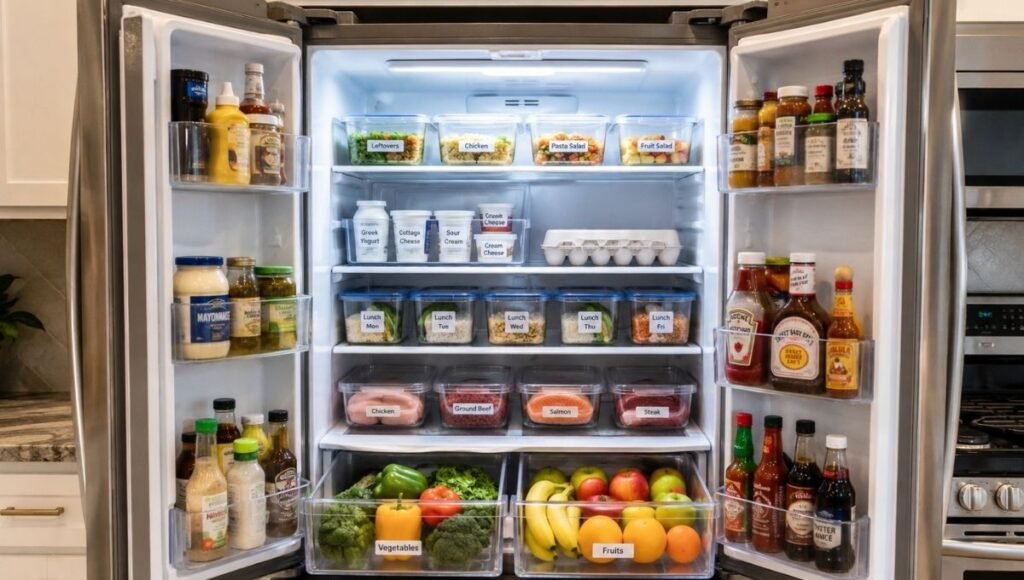
You open the fridge to find something for dinner. The leftovers from Tuesday are somewhere behind the yogurt. The produce drawer has something that was once a vegetable. There are three open jars of the same condiment at different levels of fullness. The milk is on the door. The cheese is on the bottom shelf next to the raw chicken.
This is most people’s fridge. Not dramatically chaotic — just disorganized in the slow, accumulative way that makes food go bad before you use it, makes grocery shopping harder because you can’t see what you have, and makes the fridge feel like something to avoid opening rather than a resource you actively use.
Here’s what most fridge organization guides don’t tell you: the way you organize your fridge isn’t just an aesthetic question. It’s a food safety question. The FDA recommends keeping your refrigerator at 40°F (4°C) or below — but different zones inside a standard fridge run at meaningfully different temperatures, and storing food in the wrong zone accelerates spoilage and, in some cases, creates real cross-contamination risks.
This guide covers the complete fridge organization system — the right zone for every category of food, the tools that actually help, and the weekly habit that keeps it working.
Key Takeaways
- The FDA recommends maintaining refrigerator temperature at 40°F (4°C) or below to prevent bacterial growth. However, different zones inside the fridge vary by several degrees — and most households store food in thermally incorrect zones without realizing it.
- According to the USDA, the average American family of four wastes approximately $1,500 worth of food per year. A significant portion of that waste comes from food that spoiled because it was stored in the wrong zone or couldn’t be seen and was forgotten.
- Raw meat stored above ready-to-eat foods is one of the most common causes of household cross-contamination — a single drip of raw poultry juice can contaminate food on shelves below and cause foodborne illness.
- The crisper drawer is one of the most misunderstood fridge features — most households treat it as a produce dumping zone rather than using its humidity settings, which are specifically designed to extend the life of different types of produce.
- A 20-minute weekly fridge reset — done before grocery shopping — prevents the accumulation of forgotten items, reduces duplicate purchases, and keeps the zone system functional long-term.
Step 1: Empty and Audit Before Organizing
Before reorganizing the fridge, everything needs to come out. This sounds like overkill for a container that’s already technically organized, but the audit step is where most of the real problems are discovered.
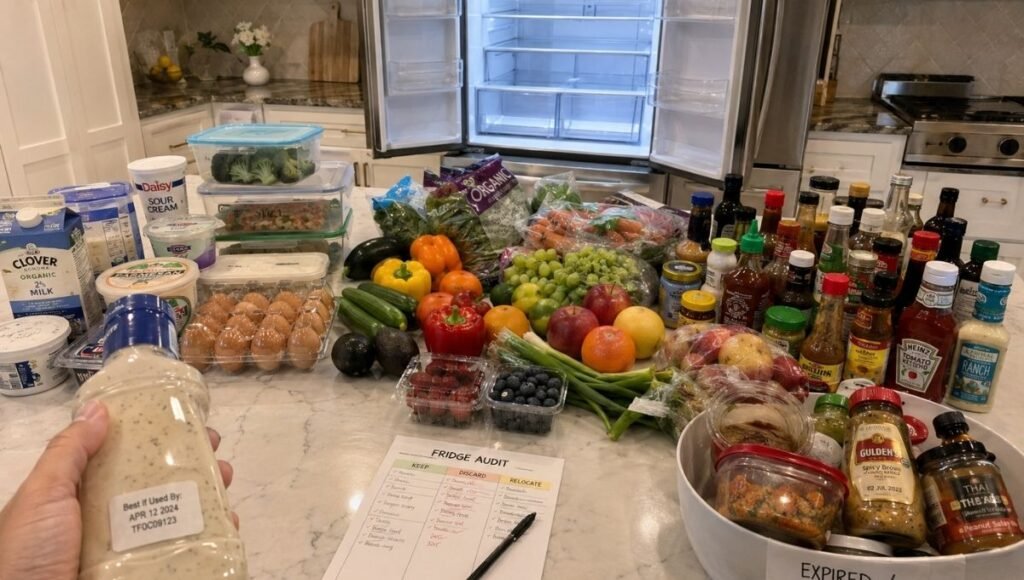
What to discard during the audit:
Anything past its use-by date — including condiments, which most people treat as indefinite. Ketchup lasts about a month after opening. Salsa lasts about two weeks. Leftover takeout that’s been in there more than 3-4 days. Produce that’s already deteriorating. Multiple open containers of the same item — combine where possible, discard where the older one is clearly past it.
The wipe-down step: With everything out, wipe every shelf and drawer with warm water and mild dish soap. A clean fridge smells better, shows you what you’re working with, and makes the organizational system you’re about to install feel intentional rather than improvised.
The inventory moment: As items come out, group them by category on the counter — all produce together, all dairy together, all raw proteins together, all condiments together. This inventory, done before putting anything back, shows you what you actually have versus what you thought you had. Most people discover they own significantly more of certain things than they realized, which directly informs the zone plan.
How to Organize Your Fridge: The Temperature Zone System
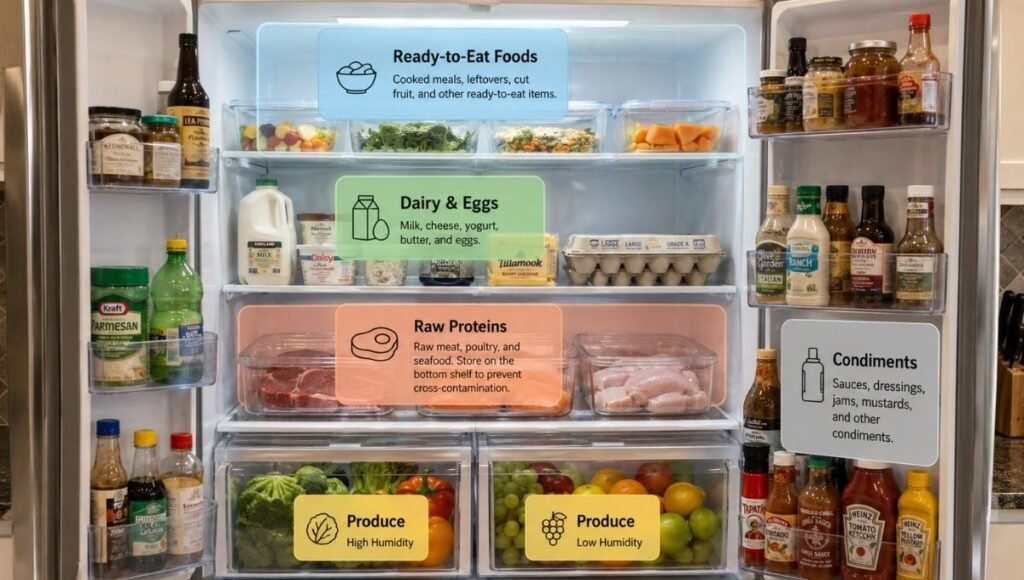
A refrigerator is not a uniform cold box. The temperature varies by several degrees between zones — the bottom shelf is consistently coldest, the door is consistently warmest, and the shelves in between range in temperature depending on their proximity to the cooling unit. Organizing by temperature zone, not by convenience or visual preference, is what actually keeps food fresh longer and prevents cross-contamination.
The Upper Shelves: Ready-to-Eat Foods
The upper shelves have consistent, moderate temperatures — slightly warmer than the lower shelves but stable. This is the correct zone for foods that won’t be cooked before eating and don’t require the coldest environment: leftovers (in labeled, covered containers), deli meats, cooked foods, drinks, yogurt, and ready-to-eat prepared items.
The labeling rule for leftovers: Every leftover container gets a label with the date it was made and a use-by date — most cooked foods are safe for 3-4 days, cooked poultry 3-4 days, soups and stews 3-4 days. Writing “use by Thursday” is more useful than writing “made Monday” because it removes the mental calculation at retrieval time.
What doesn’t belong on upper shelves: Raw proteins of any kind. Raw meat stored above ready-to-eat foods creates a genuine cross-contamination risk if any liquid drips downward.
The Middle Shelves: Dairy and Eggs
The middle shelves maintain stable, consistent temperatures — ideal for dairy products that need consistent cold without the extreme cold of the bottom shelf. Milk, butter, hard and soft cheeses, and eggs belong here.
The egg door myth: Most refrigerators have a molded egg holder on the door. This is one of the most counterproductive fridge design features — the door is the warmest, most temperature-variable zone in the fridge, and eggs are one of the most temperature-sensitive items you store. Keep eggs in their original carton on a middle shelf, where temperature is more consistent.
Milk also belongs on a shelf, not the door. The same door temperature-variability problem applies. A half-gallon of milk on the door shelf is experiencing a small temperature shock every time the door opens — which adds up over the week and accelerates spoilage.
The Bottom Shelf: Raw Proteins
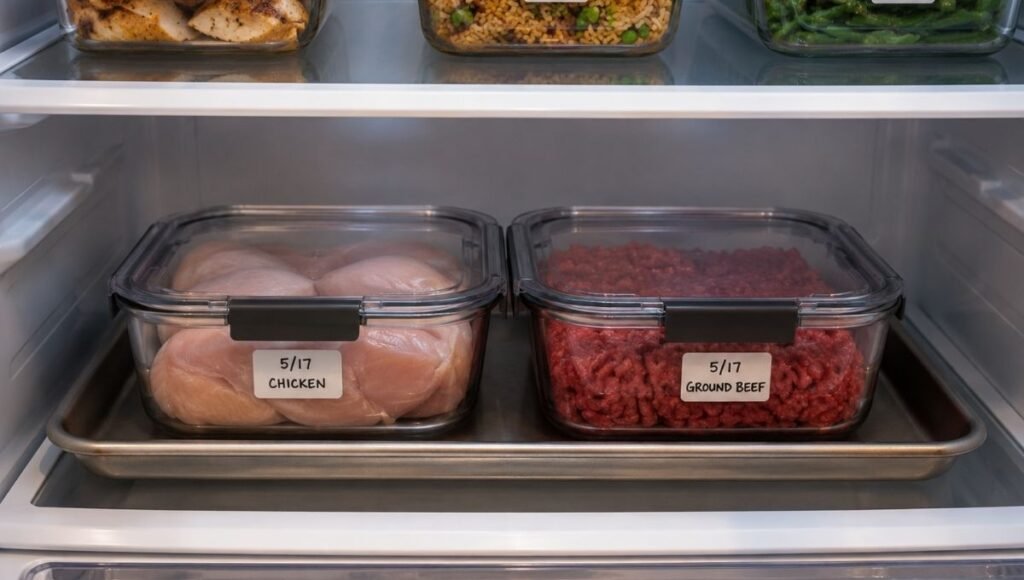
The bottom shelf is the coldest zone in the refrigerator — the most appropriate place for raw meat, poultry, and seafood. Storing raw proteins here serves two purposes: the coldest temperature slows bacterial growth, and the lowest position means any drips or leaks fall onto the shelf below rather than onto food.
Always store raw proteins in sealed or covered containers. A wrapped package of chicken from the grocery store is not sufficient — the wrap can leak. Place raw proteins in a tray, dish, or sealed container to contain any liquid.
The order within the bottom shelf: If you’re storing multiple types of raw protein, the USDA recommends organizing by cooking temperature — lowest cooking temperature at the top of the bottom shelf, highest at the bottom. Seafood and ready-to-cook items at top, whole cuts of beef and pork in the middle, ground meats lower, poultry at the very bottom (highest cooking temperature required).
The Crisper Drawers: Produce Storage
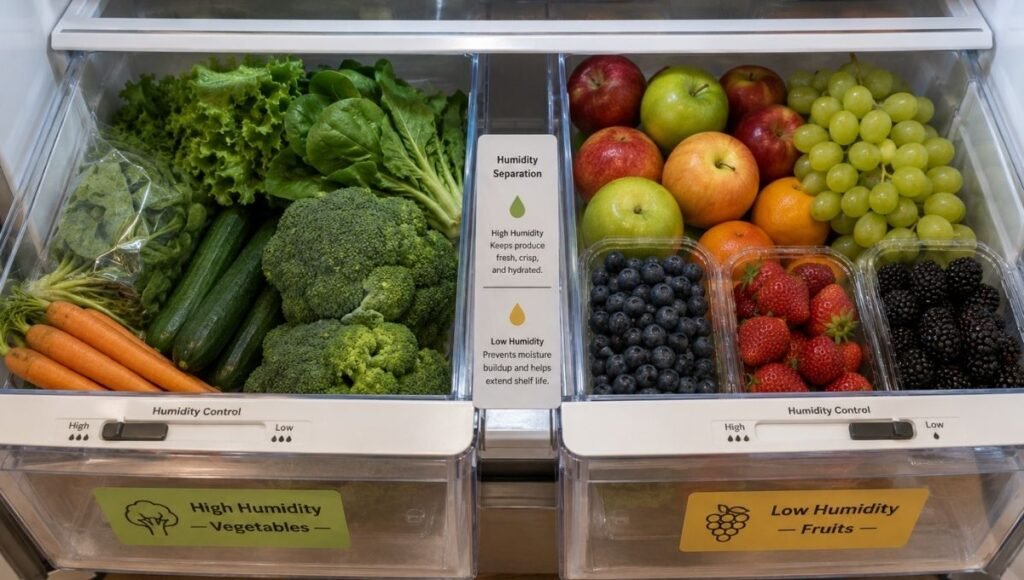
The crisper drawers maintain humidity levels specifically designed to extend produce freshness — but only when used correctly. Most refrigerators have two drawers with adjustable humidity settings, and most households use both drawers interchangeably without adjusting the settings.
High-humidity drawer: Vegetables that wilt — leafy greens, herbs, broccoli, carrots, cucumbers, peppers. High humidity prevents moisture loss that causes wilting.
Low-humidity drawer: Fruits that emit ethylene gas — apples, pears, grapes, berries. Low humidity prevents moisture buildup and allows the ethylene to escape (ethylene gas accelerates ripening in everything nearby, which is why storing apples with vegetables causes vegetables to deteriorate faster).
The key rule: Keep fruits and vegetables in separate drawers. Ethylene-producing fruits accelerate the deterioration of vegetables stored alongside them.
What doesn’t belong in the crisper: Raw meat, leftovers, dairy. The crisper is not general overflow storage — it’s a specialized produce environment.
The Door Shelves: Condiments and Shelf-Stable Items
The door is the warmest part of the refrigerator, with the most temperature fluctuation — every time the door opens, ambient room temperature air enters. This makes it the least appropriate zone for highly perishable items, and the most appropriate zone for condiments, juices, and items with preservatives that can tolerate some temperature variability.
What belongs on the door: Condiments (ketchup, mustard, hot sauce, salad dressings), juices, water, sodas, butter (can tolerate door temperatures), jams and jellies.
What doesn’t belong on the door: Milk, eggs, fresh juice without preservatives, opened wine, anything highly perishable. Despite common fridge design including a large dairy compartment on the door, this placement is thermally incorrect for milk.
Refrigerator Organization Ideas: The Tools That Actually Help
The zone system alone transforms fridge organization. The right tools make it work better and make maintenance easier — but only in this order: zone first, tools second.
Clear bins and organizers: Grouping like items in clear bins inside the fridge creates subcategories within each zone and prevents items from getting buried at the back. A clear bin for all yogurt means you see every yogurt at once; no individual container gets pushed to the back and forgotten. Measure shelf dimensions before purchasing — bins that are slightly too wide or too tall don’t fit properly and don’t get used.
Lazy Susan (turntable) for condiments: A turntable on a shelf or in a door compartment brings items at the back to the front with a spin. Particularly effective for the door condiment zone and for tall bottles that get lost behind each other.
Clear stackable produce containers: Washed and prepped produce in clear containers at eye level makes healthy choices the easy choices — you see the cut strawberries before you see the leftover pasta. Pre-washed, pre-cut produce also lasts well in the fridge when stored correctly in sealed containers.
Date labels: A roll of masking tape and a marker, or a dedicated set of date labels, placed on every leftover container and every opened package removes the guesswork from “is this still good?” decisions. Write the use-by date, not the made-on date.
A fridge thermometer: Over 87% of home refrigerators display inaccurate internal temperatures. A $10 refrigerator thermometer placed on the middle shelf tells you whether your fridge is actually maintaining 40°F or below — if it’s running warmer, food is spoiling faster than you realize and bacterial growth is accelerating.
Fridge Organization Ideas for Families
A fridge used by multiple people — especially with children — requires a few additional design decisions beyond the zone system.
The eye-level snack zone: Place approved snacks and drinks at a height children can reach independently — this reduces the “can I have something?” requests and the rummaging through the whole fridge that disrupts the organization. A dedicated snack bin at eye level for kids with options you’re happy to have them grab independently works well for households with school-age children.
The “use first” section: A designated area (typically a bin or a specific shelf location) for items that need to be used soon — the produce that’s starting to turn, the leftovers from two nights ago, the yogurt expiring tomorrow. Checking this section first when deciding what to eat or cook reduces waste significantly. Some households label this “Eat Me First.”
The meal prep storage system: If you meal prep weekly, a designated section of the middle shelf holds the week’s prepped meals in clear, labeled containers. Everything for the week visible at once, ready to grab, dated. This eliminates the “what do I have to eat?” problem that leads to ordering takeout instead of using what’s already made.
How to Keep a Fridge Organized Long Term
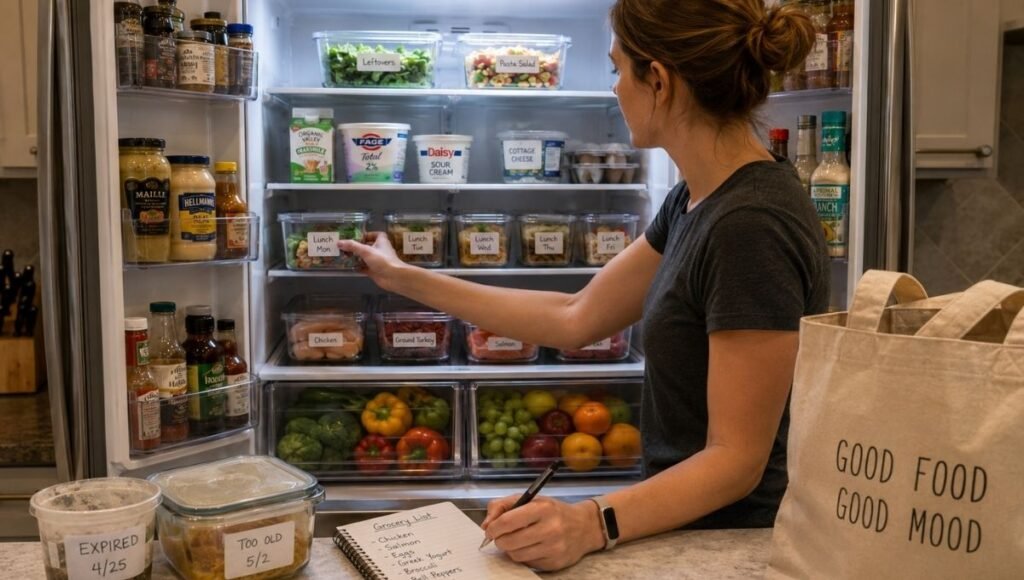
The most organized fridge in the world reverts to chaos within three weeks without a maintenance habit. The zone system is the structure; the weekly reset is what keeps it working.
The weekly fridge reset (20 minutes, before grocery shopping):
Do this before — not after — the grocery run. Everything in the fridge is more visible when you’re looking for what needs to be used rather than where to put new items.
Check every shelf for items expiring soon — move them to the “use first” zone. Discard anything that’s past it. Wipe any spills. Check the produce drawers for items starting to deteriorate. Make a list of what’s running low that needs restocking.
Then go grocery shopping with an accurate picture of what you have.
When the new groceries arrive, new items go to the back of each zone, existing items move forward. This FIFO (first in, first out) rotation — the same method grocery stores use — ensures you always use the oldest items first.
The one-in-one-out container principle: When a leftover container goes in, an old one should come out. Refrigerators where leftovers accumulate indefinitely are refrigerators where things get lost and forgotten. Three or four active leftover containers is reasonable. Eight is a problem.
If You Only Have 10 Minutes Right Now
10 minutes: Do an expired-item sweep. Open every condiment, check the date, discard what’s past it. Check leftovers and discard anything older than four days. In most refrigerators this sweep creates significant visible space and removes the items most likely to be quietly causing odors.
20 minutes: Do the full empty-and-audit. Everything out, wipe down the shelves, put items back in their correct temperature zones. Don’t buy a single organizer first — just implement the zone system with what you have. See how it functions for one week before purchasing anything.
30 minutes: Implement the zone system and add one or two targeted tools — a lazy Susan for the door, a clear bin for the middle shelf, date labels for all current leftovers. These three additions make the system significantly more functional without requiring a full organizational product haul.
FAQ: How to Organize a Fridge
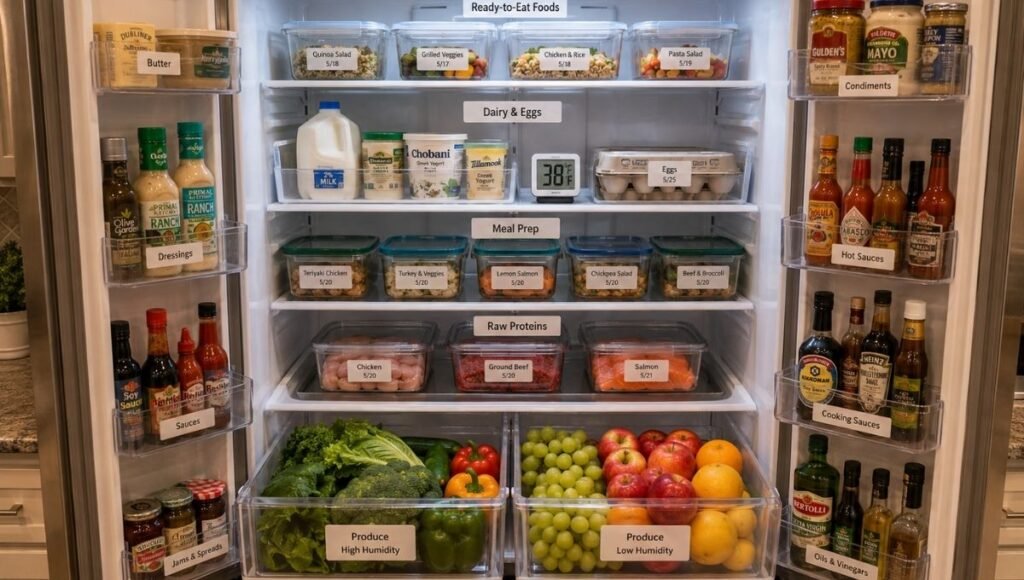
What is the correct way to organize a refrigerator by zone? Upper shelves for ready-to-eat foods and leftovers; middle shelves for dairy and eggs; bottom shelf for raw proteins (in sealed containers, organized by cooking temperature with poultry lowest); crisper drawers for produce (vegetables in high-humidity, fruits in low-humidity); door for condiments and temperature-tolerant items. The organizing principle is temperature — coldest zones for highest-risk items.
Where should eggs go in the fridge? On a middle shelf in their original carton, not in the door’s egg compartment. The door is the warmest, most temperature-variable zone in the fridge. Eggs are temperature-sensitive and benefit from the stable, consistent temperature of a middle shelf. The molded egg holder in most fridge doors is a design convenience, not a food safety recommendation.
Where should milk go in the fridge? On a middle or upper shelf, not on the door. Milk is highly perishable and benefits from stable, cold temperatures. The door — despite most fridges having a large dairy compartment there — experiences temperature fluctuations every time the door opens, which accelerates spoilage.
How long do leftovers last in the fridge? Most cooked foods: 3-4 days. Cooked poultry: 3-4 days. Soups and stews: 3-4 days. Cooked beef, pork, and lamb: 3-5 days. These timelines assume the fridge is maintaining 40°F (4°C) or below. Label every leftover container with a use-by date rather than a made-on date to remove the mental calculation at retrieval time.
How do I stop food from getting lost in the back of the fridge? Clear bins group like items together so nothing gets buried — every yogurt is visible in the yogurt bin, not hidden behind taller items. The FIFO rotation (new items to the back, existing items to the front) ensures older items are always accessible first. A weekly fridge reset before grocery shopping surfaces everything that needs to be used.
What should not be stored in the fridge door? Milk, eggs, fresh juice without preservatives, any highly perishable item. The door is the warmest part of the fridge with the most temperature fluctuation. It’s appropriate for condiments, bottled water, juices with preservatives, and other items that can tolerate some temperature variability.
How often should I clean out the fridge? A weekly 20-minute reset before grocery shopping handles most maintenance. A monthly wipe-down of shelves and drawers, and a quarterly deep clean (emptying fully, removing and washing drawers and shelves), keeps the fridge hygienic and prevents the gradual odor accumulation that makes fridges unpleasant to open.
Start With the Bottom Shelf Tonight
You don’t need to reorganize the entire fridge to make a meaningful improvement. Start with the one change that has the highest food safety impact: move all raw proteins to the bottom shelf in sealed containers, and move anything that was below them upward.
That single change — correctly implemented — eliminates the most common cross-contamination risk in household refrigerators. Everything else in this guide builds on that foundation.
Explore more on Vomoxs:
- Pantry Organization Ideas: How to Organize Your Pantry So You Can Actually Find Everything
- How to Organize Kitchen Cabinets: A Step-by-Step Zone System
- Home Organization Ideas: The Complete Room-by-Room Guide
References
- U.S. Food and Drug Administration (2024). Refrigerator & Freezer Storage Chart. FDA Food Safety guidance on refrigerator temperature zones and food storage times. fda.gov/food/buy-store-serve-safe-food/refrigerator-freezer-storage-chart.
- U.S. Department of Agriculture Food Safety and Inspection Service (2024). Refrigeration and Food Safety. USDA guidance on safe refrigerator organization and food storage. fsis.usda.gov/food-safety/safe-food-handling-and-preparation/food-safety-basics/refrigeration-food-safety.
- Natural Resources Defense Council (2022). Wasted: How America Is Losing Up to 40 Percent of Its Food from Farm to Fork to Landfill. Research on household food waste and economic cost.
Category: Room Organization | Reading time: 10 min | Last updated: 2026