
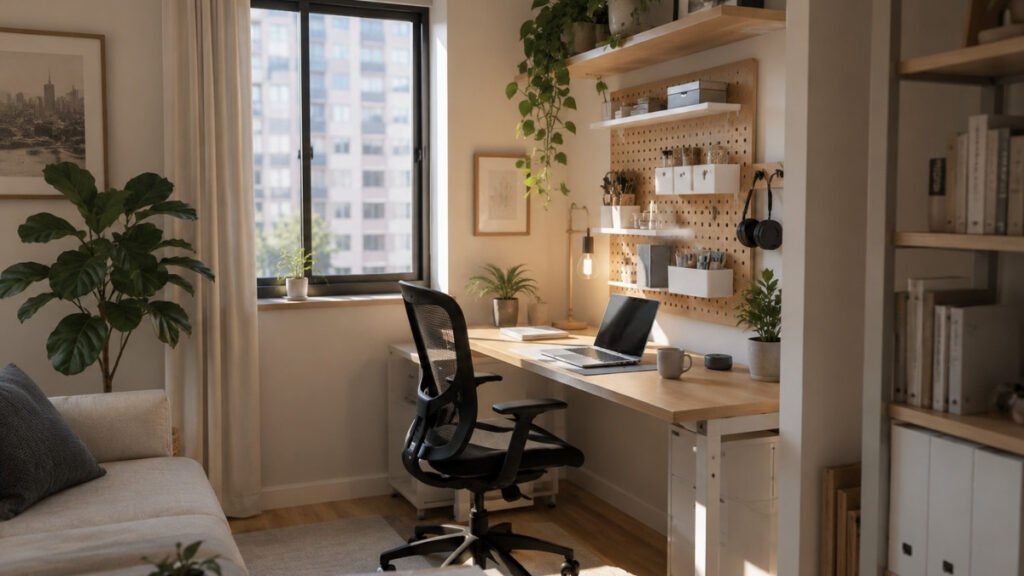
Finding enough room to work at home isn’t always easy. A bedroom corner, a section of the living room, or an unused closet often ends up becoming the office. Without a thoughtful setup, limited space quickly turns into a cluttered desk, tangled cables, and storage that never seems to work.
The best small home office ideas focus on making every inch count—not adding more furniture. A better layout, space-saving storage, and a few practical habits can turn even a compact corner into a workspace that’s comfortable, organized, and easy to maintain.
In this guide, you’ll discover smart layouts, furniture sized for small spaces, simple storage solutions, and realistic tips that help keep your office tidy long after the initial setup.
Overview: The Fast Answer
If you want the short version before diving in, here’s what actually makes a small home office work:
- Use an unused corner instead of taking over a main living space. A dead corner, alcove, or closet almost always works better than carving space out of your living room.
- Choose shallow-depth furniture and vertical storage. Depth is what makes a small room feel tight — going up instead of out solves this.
- Keep the desktop clear as a daily habit, not just during a big weekend cleanup.
- Plan your cables before you set up the desk, not after everything is already plugged in.
- Keep office supplies hidden, so the space still looks like part of your home.
- Build a quick end-of-day reset so the office disappears when you’re done working.
None of this requires a big budget or a full room. It just requires planning your layout and storage before you start buying furniture — which is exactly where we’ll begin.
Start with a Plan Before You Buy
In a small space, a few measurements and a simple plan make a bigger difference than choosing the perfect piece of furniture. Before shopping, decide where your workspace will go, measure the area carefully, and think about how you’ll use it every day.
Find the Best Location
Not every home has a spare room, but almost every home has an underused space that can become one. Common options include:
- A bedroom corner, ideally near natural light
- A section of a living room wall
- A closet, converted into what’s often called a “cloffice”
- An alcove or nook
- A hallway with enough width for a narrow desk
- The space under a staircase
The best location is one that already gets some natural light, sits near an outlet, and doesn’t block a main walking path.
Measure Before Shopping
Before buying any furniture, measure the full space — not just where you imagine the desk going. A common mistake is measuring only the desk’s footprint and forgetting to account for the chair’s pull-out space and a comfortable walking clearance around it.
As a simple rule of thumb: your desk needs its own footprint, plus roughly 90 cm (35 in) behind it for the chair to pull out and for you to stand up comfortably. If a doorway, closet, or walkway is nearby, make sure that clearance doesn’t overlap with it.
Plan Around Your Daily Routine
Think about how you’ll actually use the space day to day. If you take frequent video calls, consider what’s behind you in the camera frame. If you share the room with a bed or a couch, think about whether the office needs to be easy to hide at the end of the day. Your daily routine should shape your layout — not the other way around.
Small Office Planning Worksheet
| What to Check | Why It Matters |
|---|---|
| Available wall or corner width | Determines maximum desk size |
| Distance to nearest outlet | Affects cable length and placement |
| Natural light direction | Impacts screen glare and mood |
| Chair pull-out clearance | Prevents a cramped, awkward setup |
| Nearby walking paths | Avoids blocking daily movement |
| Need to hide the office daily | Determines if you need fold-away furniture |
Before You Buy Checklist
- [ ] Space is measured, including chair clearance, not just desk size
- [ ] An outlet is within easy reach or a cable plan is in place
- [ ] The spot doesn’t block a main walking path
- [ ] Natural light or a lighting plan has been considered
- [ ] You know whether the office needs to be hidden daily
Key takeaway: Layout decides how well your office actually works — the furniture is the last step, not the first.
10 Small Home Office Ideas for Every Type of Space
A desk that fits perfectly in a bedroom corner may not make sense in a living room or a converted closet. The ideas below are practical, space-saving solutions for different types of homes, making it easier to find a layout that fits the space you already have.
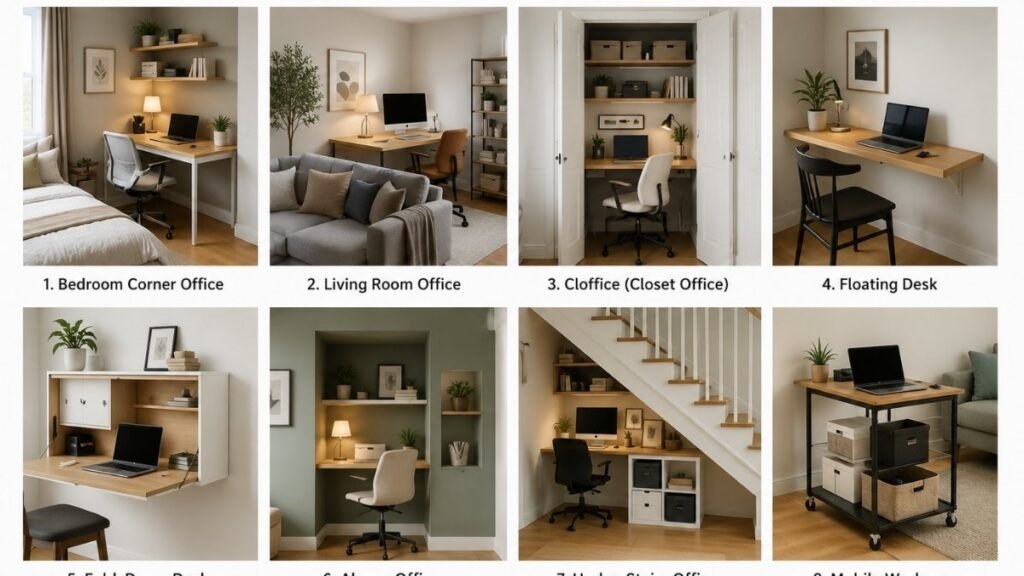
Bedroom Corner Office
Best for people without a spare room who mainly work solo. Pair it with a narrow desk (under 100 cm wide) and closed storage nearby so the office doesn’t visually compete with the bed.
Living Room Office
Works well for smaller apartments where the living room is the only flexible space. A slim console-style desk against a wall keeps the footprint minimal.
Cloffice (Closet Office)
A closet converted into a compact desk nook. Best for anyone who wants to close the door at the end of the day and make the office disappear entirely.
Floating Desk
A wall-mounted desk with no legs touching the floor. Ideal for very tight spaces since it keeps the floor visually open and makes the room feel larger.
Fold-Down Desk
A wall-mounted desk that folds flat when not in use. Best for shared or multipurpose rooms where the space needs to serve another function most of the day.
Alcove Office
Built into a recessed wall space. Works well because the surrounding walls naturally frame and contain the office area.
Under-Stairs Office
Makes use of otherwise wasted space. Best suited to shorter desks and standard (not oversized) chairs, since headroom decreases toward the back.
Hallway Office
A narrow desk placed along a wide hallway. Works only if the hallway has enough width to avoid blocking foot traffic.
Window Office
A desk placed directly under or beside a window. Great for natural light, though it’s worth considering glare on your screen during certain hours.
Mobile Home Office
A rolling cart or portable desk setup that can be tucked away or moved between rooms. Best for renters or anyone without a fixed space to dedicate long-term.
A common mistake: choosing a large desk because it fits on paper. Many people find that a big desk technically fits the room, but it ends up making the entire space feel cramped once the chair, walking path, and everyday clutter are factored in. A slightly smaller desk almost always feels more livable.
Small Home Office Layout Comparison
| Layout | Footprint | Storage Ability | Hideability | Renter-Friendly |
|---|---|---|---|---|
| Bedroom Corner | Small–Medium | Medium | Low | Yes |
| Living Room Wall | Medium | Medium | Low | Yes |
| Cloffice | Small | High | Very High | Depends on closet |
| Floating Desk | Small | Low–Medium | Low | No (requires mounting) |
| Fold-Down Desk | Very Small | Low | Very High | Depends on mounting |
| Alcove | Small–Medium | Medium | Medium | Yes |
| Under-Stairs | Small | Medium | Medium | Yes |
| Hallway | Small | Low | Low | Yes |
| Window Nook | Small–Medium | Medium | Low | Yes |
| Mobile Cart | Small | Low–Medium | High | Yes |
Choose Space-Saving Furniture That Fits Your Space
A desk that’s too deep or a bulky office chair may fit the measurements, but it can leave the space feeling cramped once you start using it every day. Choosing furniture that’s designed for compact spaces helps your home office feel more open, comfortable, and easier to move around in.
Choose the Right Desk
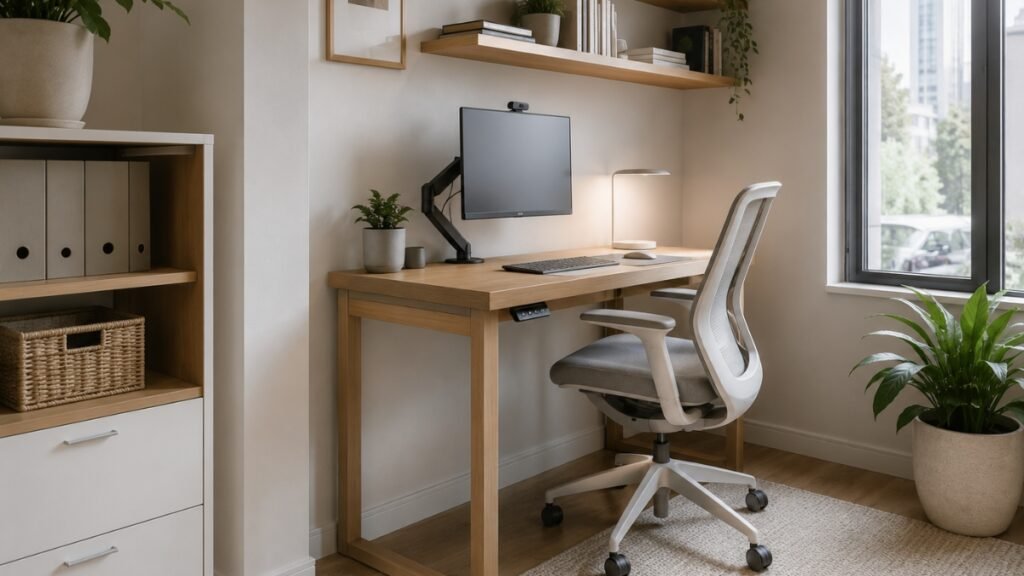
A narrow desk (40–50 cm deep) works for most laptop-based tasks and takes up noticeably less room than a standard 60–70 cm deep desk. If you need more surface area only occasionally, a floating or fold-down desk gives you flexibility without a permanent footprint.
Pick a Chair That Tucks Away
Look for a chair that slides fully under the desk when not in use, rather than one that sticks out into the walking path. Armless or slim-armed chairs generally tuck away more cleanly than wide, heavily padded ones.
Use Light and Color to Open the Space
A monitor arm frees up desk surface by lifting your screen off the desktop entirely — small change, noticeable difference in usable space. Lighter furniture tones and a nearby light source also help a small office avoid feeling boxed in, since dark, bulky furniture tends to visually shrink a room more than the same piece in a lighter finish.
Desk Type Comparison
| Desk Type | Best For | Footprint | Hideable |
|---|---|---|---|
| Narrow Desk | Everyday laptop use | Small | No |
| Floating Desk | Very tight spaces | Very Small | No |
| Fold-Down Desk | Shared/multipurpose rooms | Minimal when folded | Yes |
| Standard Desk | Heavier desktop setups | Medium–Large | No |
Furniture Buying Checklist
- [ ] Desk depth fits your actual space, not just the room’s total width
- [ ] Chair fully tucks under the desk when not in use
- [ ] A monitor arm or riser is considered to free up desk surface
- [ ] Furniture tone suits the room’s lighting, not just personal taste
- [ ] Fold-down or floating options are considered for shared spaces
For more on sizing and arranging your desk itself, our Desk Organization Ideas guide breaks down surface layout in more detail.
Build a Smart Storage System Without Adding More Clutter
A desk that’s a few inches too deep or a chair that won’t slide underneath can make the whole area feel crowded. Choosing compact, space-saving furniture keeps the workspace comfortable without taking over the rest of the room.
Organize the Wall
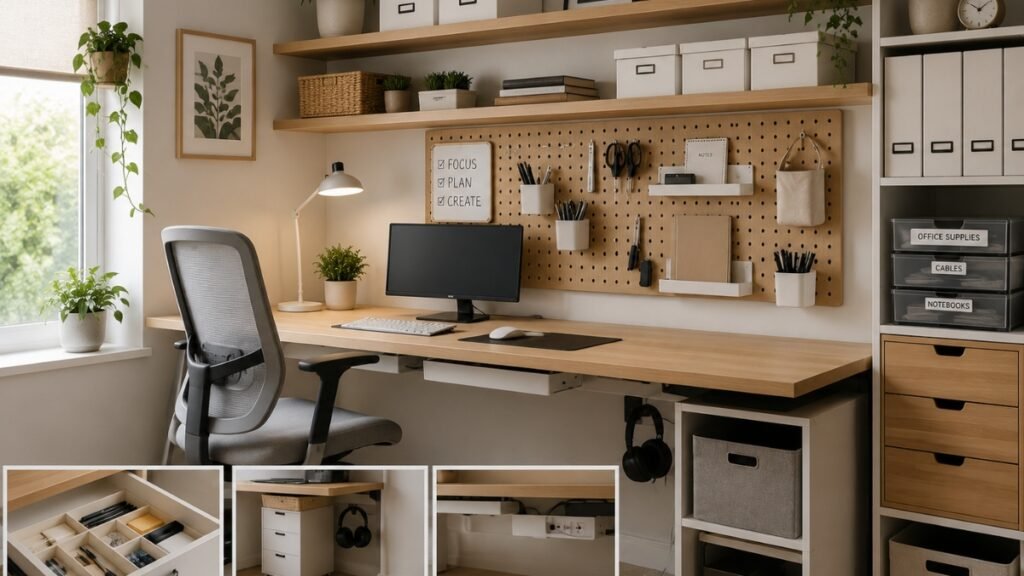
Wall-mounted storage is one of the highest-value additions in a small office, since it uses space that would otherwise sit empty. A pegboard keeps frequently used tools within reach and visible, while floating shelves handle books, files, or decorative items without taking up any desk or floor space.
Organize the Desk
Start with a simple rule: nothing stays on the desktop overnight except your computer. Drawer organizers keep small supplies sorted instead of loose, and under-desk storage (a small drawer unit or rolling cart) handles anything that doesn’t need daily access.
Hide Your Cables
Cable clutter is one of the fastest ways a tidy desk starts to look messy again. A cable tray mounted under the desk, or a simple cable box near the outlet, keeps power strips and cords out of view. It’s worth planning this before your final setup, since running cables after everything is already arranged is far more frustrating.
For renters, most of these solutions — pegboards, floating shelves, cable clips — are available in damage-free, adhesive-mounted versions that don’t require drilling.
Small Office Storage Tool Comparison
| Storage Tool | Best For | Wall/Desk Damage | Renter-Friendly |
|---|---|---|---|
| Pegboard | Frequently used tools and supplies | Minimal (with adhesive strips) | Yes |
| Floating Shelves | Books, files, decor | Some drilling typically required | Depends on mount type |
| Rolling Cart | Mobile, flexible storage | None | Yes |
| Drawer Organizers | Small desk supplies | None | Yes |
Desk and Storage Checklist
- [ ] A “clear desktop overnight” rule is in place
- [ ] Wall space is used for at least one storage tool
- [ ] Drawer organizers separate small supplies by type
- [ ] Cables are managed with a tray, box, or clips
- [ ] Storage additions solve a specific problem, not just “more space to fill”
If you’re planning wall storage for the first time, our Floating Shelf Ideas guide covers spacing, weight limits, and layout options in more depth.
Create Clear Boundaries Between Work and Home
When work and everyday life share the same space, a few simple habits can make it much easier to switch off at the end of the day and keep your home feeling like home.
Hide the Office After Work
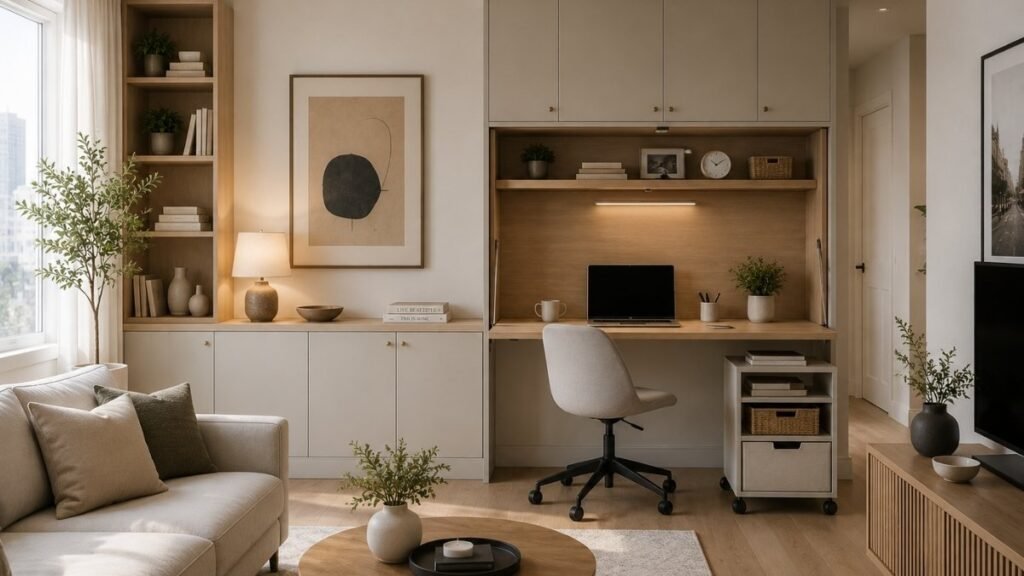
If your desk sits in a bedroom or living room, a simple visual boundary helps the space feel less like “work is always here.” Fold-down desks and mobile carts make this easiest, since the entire setup can close up or roll away in seconds. Even without fold-away furniture, closing a laptop, tucking in the chair, and clearing the desktop creates a clear enough separation for most people.
Build a Simple Reset Routine
A short daily reset is far easier to stick with than one big weekend cleanup. Spending five minutes each evening putting things back in place prevents the kind of buildup that eventually requires a full afternoon to fix.
Five-Minute Office Reset
- [ ] Clear the desktop of everything except your computer
- [ ] Tuck the chair fully under the desk
- [ ] Coil or tuck away any loose cables
- [ ] Put loose papers or supplies into their designated spot
- [ ] Fold down or cover the desk if it’s in a shared space
Key takeaway: A good office setup should let you start working quickly — and stop working just as easily.
Common Small Home Office Mistakes to Avoid
A small home office can start out looking organized but slowly become harder to use over time. The desk fills up, cables get pushed aside, and furniture that once seemed like a good fit suddenly feels too bulky. Most of these problems are easy to avoid with a few smarter choices from the beginning.
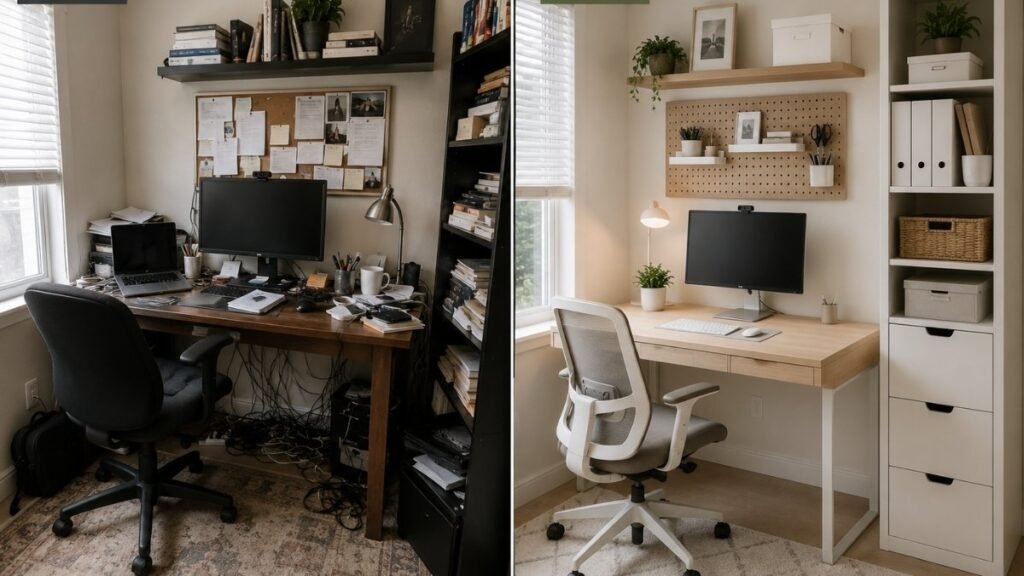
Furniture Mistakes
- Choosing a desk that’s too large for the room’s actual proportions
- Picking a chair with wide arms that blocks the walking path
- Ignoring chair clearance when measuring the space
Storage Mistakes
- Letting the desktop become the default storage spot for everything
- Ignoring wall space that could hold a shelf or pegboard
- Leaving cables unmanaged until they become a tangled mess
Maintenance Mistakes
- Buying more bins and organizers instead of fixing the underlying system
- Skipping a daily reset and letting clutter build up until it feels overwhelming
- Working in poor lighting instead of adding a simple desk lamp or task light
Small Office Mistake Audit
- [ ] Desk and chair sizes actually match the room, not just “fit on paper”
- [ ] Wall space is used for at least some storage
- [ ] Cables are managed rather than left loose
- [ ] A daily reset habit is in place, not just occasional big cleanups
- [ ] Lighting is sufficient for both work and video calls
Key takeaway: Fixing these common mistakes matters more than buying additional storage products.
Frequently Asked Questions
How do I arrange a home office desk in a very small room or tight corner? Start by measuring the full space, including chair clearance, not just the desk footprint. A narrow or floating desk placed against the shortest available wall usually works best, since it keeps the room’s main walking path clear.
What are the best low-cost cable management ideas to hide messy cords in a small office? An under-desk cable tray or a simple cable box near your outlet keeps power strips and cords out of sight. Planning your cable routing before your final setup is much easier than trying to fix it afterward.
How can I use vertical wall space for office storage when floor space is limited? A pegboard or floating shelf above the desk adds storage without using any floor space. Vertical storage is often the single biggest space-saver in a small office setup.
How do I create a small home office setup in a bedroom or living room corner? Choose a narrow desk that fits the corner’s actual dimensions, pair it with closed storage nearby, and keep the desktop clear daily so the office doesn’t visually take over the room.
What is a “cloffice” and how do I convert a small closet into a home office? A cloffice is a closet converted into a compact workspace — typically a small desk, a shelf, and a chair that fits inside the closet frame. It works well because you can close the door at the end of the day and the office disappears entirely.
What budget-friendly storage tools are best for organizing a small home office? Pegboards, floating shelves, and drawer organizers are affordable, effective options. The key is choosing tools based on a clear storage system, not simply adding more bins to hold overflow.
How do I make a small, windowless, or dark home office feel bright and cozy? Add a dedicated desk lamp along with a secondary light source, since most windowless spaces rely too heavily on a single overhead fixture. Lighter furniture tones can also help the space feel less closed-in.
How can renters set up wall storage in a small home office without damaging the walls? Adhesive-mounted pegboards, hooks, and lightweight shelving are widely available and don’t require drilling. These options let you add vertical storage while keeping the space fully rental-friendly.
Final Thoughts
The best small home office ideas aren’t always the ones with the biggest desks or the most expensive furniture. They’re the ones that make everyday work feel a little easier and your home a little calmer. Start with one small improvement, whether it’s rearranging your desk, adding better storage, or clearing a cluttered corner. Over time, those simple changes can turn even the smallest space into a home office you’ll genuinely enjoy spending time in.
🏠 Behind This Guide
Small home offices often have to fit into spaces that were never designed for work, from bedroom corners to living rooms and converted closets. That’s why this guide focuses on practical ideas that work in everyday homes instead of picture-perfect setups.
Our editors researched common small-space challenges, reviewed trusted home organization practices, and analyzed real questions people ask when creating compact workspaces. Every recommendation was selected for its simplicity, space efficiency, and long-term usability, helping you create a workspace that’s easier to organize, more comfortable to use, and realistic to maintain without a large budget or a dedicated office.
🏡 Continue Organizing Your Home
A well-designed home office works even better when the rest of your home stays organized too. Explore these practical guides for creating functional, clutter-free spaces throughout your home.
- Small Space Storage Ideas — Discover smart storage solutions that help you make the most of every inch without adding clutter.
- Minimalist Home Decor — Learn how to create a clean, calming home with simple decorating ideas that balance style and function.
- How to Declutter Your Home — Follow an easy step-by-step approach to reduce clutter and build habits that are easier to maintain.
- Home Organization Ideas — Explore practical organization tips for every room, from the kitchen and bedroom to the bathroom and entryway.
❤️ A Final Note
A well-organized home isn’t built overnight—it’s created through simple habits and thoughtful solutions that make everyday life a little easier.
At Vomoxs, we believe that every home, no matter its size or budget, deserves to feel organized, functional, and welcoming. That’s why we share practical organizing ideas, affordable storage solutions, and realistic tips that help you create spaces that are easier to live in and easier to maintain.
Our mission is simple: helping you build a more organized home, one space and one habit at a time.