
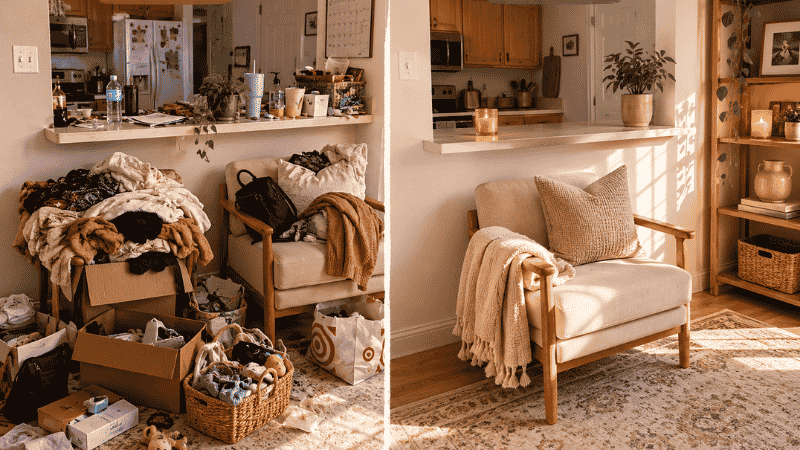
You’ve walked past that pile in the corner so many times you’ve stopped seeing it. The closet door doesn’t quite close anymore. The kitchen counter has become a permanent landing zone for everything that doesn’t have a real home. And somewhere between work, kids, meals, and the thousand other things that fill your days, the clutter just… accumulated.
Here’s what almost nobody says out loud: it usually didn’t happen because you’re disorganized. It happened because life did. A move, a new baby, a hectic season, a period of grief or stress where the last thing you had energy for was deciding where to put things. And then one day you looked around and couldn’t figure out where to even begin.
That feeling — standing in the middle of a cluttered room with no idea which direction to turn first — is one of the most common experiences people describe when they finally decide to declutter their home. It’s not a character flaw. It’s just an overwhelming amount of decisions stacked on top of each other, all at once.
This guide is about making that first step manageable. Then the second. Then the rest, room by room, at a pace that actually sticks.
Key Takeaways
- A UCLA study found that the density of household objects correlates directly with elevated cortisol — meaning a cluttered home is a measurable source of daily stress, not just an aesthetic problem.
- The #1 reason decluttering fails isn’t lack of willpower — it’s decision fatigue. Breaking the process into small, timed sessions dramatically improves follow-through.
- Starting with the easiest room (not the worst one) builds momentum that carries you through the harder spaces.
- Emotional attachment to objects is normal and valid — it doesn’t mean you have to keep everything. There are specific techniques for working through this without guilt.
- Decluttering is not a one-time event. The homes that stay clear have simple maintenance habits, not perfect self-discipline.
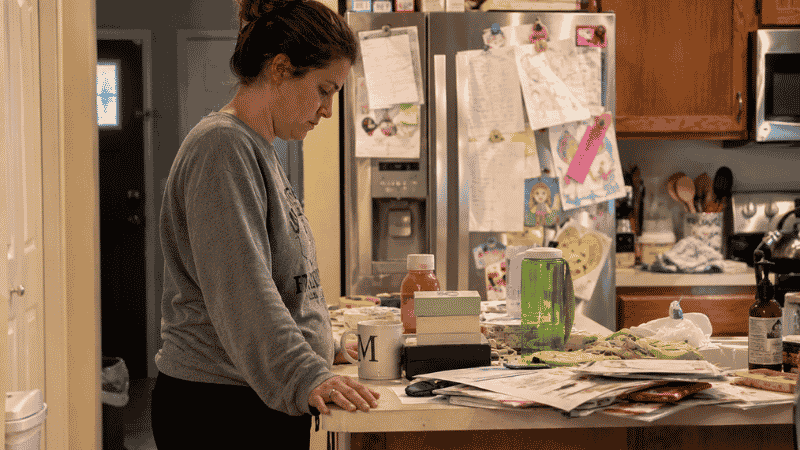
Why Decluttering Your Home Feels So Overwhelming (And Why That’s Normal)
Before we get into the how, let’s talk about the why — because understanding what makes this hard is half of what makes it possible.
Decluttering a home isn’t really about stuff. It’s about making hundreds of small decisions in a row: keep this, let go of that, find a home for this other thing. Decision fatigue is a well-documented psychological phenomenon — research published in the Journal of Personality and Social Psychology shows that the quality of our decisions deteriorates significantly after making many decisions in sequence, regardless of how important those decisions are. That’s why you can start a declutter session feeling motivated and end it an hour later staring blankly at a drawer full of takeout menus, unable to decide anything.
This is also why the classic advice — “just spend a weekend and do the whole house” — works for almost nobody. It’s not a time problem. It’s a cognitive load problem.
The other thing that makes decluttering hard that almost no guide acknowledges directly: things carry meaning. The sweater from your mother, the kids’ drawings you’ve been meaning to frame for three years, the equipment from a hobby you had before everything got busy — these aren’t just objects. They represent versions of yourself, relationships, possibilities. Deciding to let them go isn’t the same as throwing out an empty box. It takes something from you, even when it’s the right decision.
Both of these realities — decision fatigue and emotional weight — mean that the approach matters as much as the intention.
How to Start Decluttering When You’re Overwhelmed: Start Smaller Than You Think
This is the most important section in this entire guide, and it’s the one most people skip past looking for a more comprehensive system.
If you are overwhelmed, the answer is not a better system. The answer is a smaller starting point.
Here’s the framework that actually works:
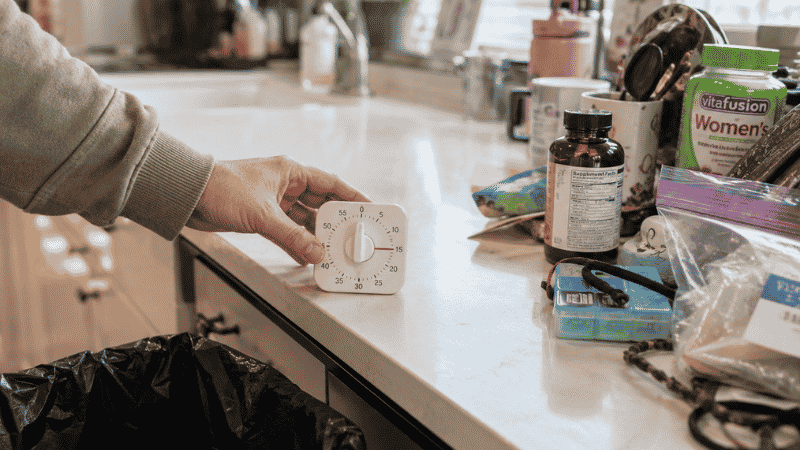
Set a timer for 15 minutes. Pick one surface. Do nothing else.
Not a room. Not a category. One surface — the kitchen counter, the bathroom counter, the top of the dresser. Set a visible timer. Work only until it goes off. Then stop, regardless of where you are.
This works for three reasons. First, 15 minutes is short enough that the “I don’t have time” objection disappears — everyone has 15 minutes. Second, one surface is small enough that you’ll likely finish it, which gives you a genuine sense of completion rather than the perpetual feeling of a half-done project. Third, finishing something, however small, creates momentum. The psychological research on this is consistent: completing tasks releases dopamine, which makes the next task feel more approachable.
The honest confession: The first session probably won’t feel satisfying. You’ll clear one surface and look around at everything else and feel like it made no difference. That feeling is lying to you. Visible progress in a cluttered home takes more than one session to register — but it’s accumulating even when it doesn’t look like it.
What to Do If You Genuinely Don’t Know Where to Start
Start with trash. Just trash. Walk through every room with a garbage bag and collect only obvious garbage — expired products, broken things beyond repair, packaging that’s been sitting out, food wrappers, dead pens. Don’t make any decisions about anything that isn’t clearly garbage.
This sounds almost insultingly simple. It works anyway. Removing actual garbage creates visual space, costs zero emotional energy, and takes 15–20 minutes in most homes. The room looks better immediately. That’s the momentum you need to keep going.
How to Declutter Your Home Room by Room
Once you’ve done your initial trash sweep and cleared one or two surfaces, you’re ready to work through the house systematically. The order matters — start with the rooms that are easiest, not the rooms that bother you most. Counterintuitive, but correct. Easy rooms build the decision-making muscle and the confidence you need for the hard ones.
How to Declutter the Bathroom First
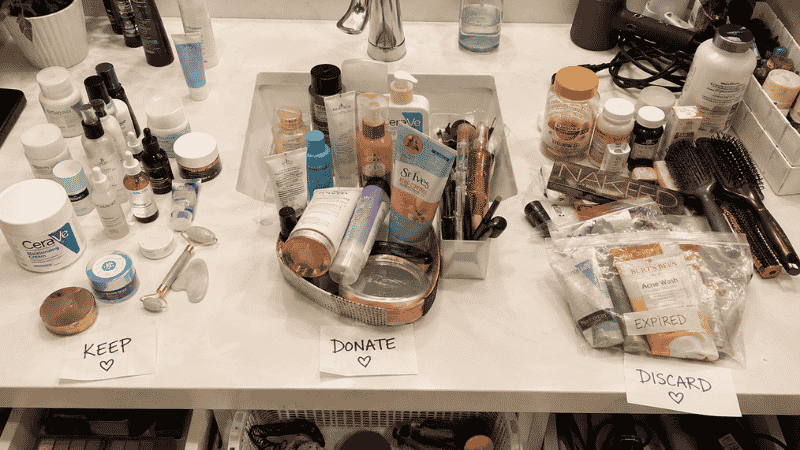
The bathroom is the best starting room for almost everyone. Here’s why: bathroom items have the clearest objective criteria for keeping or discarding. Expired? Goes. Broken? Goes. Haven’t opened in 6 months? Probably goes. There are very few emotionally loaded items in a bathroom. Almost no one cries over a dried-up mascara.
The bathroom declutter process:
Open every cabinet, drawer, and shelf. Pull everything out onto the counter or floor.
Go through each item with three questions:
- Is it expired or broken? → Discard immediately, no deliberation
- Have I used this in the past 3 months? → If no, it goes in a “probably out” pile
- Do I have duplicates? → Keep the best one, discard the rest
What remains gets returned to defined zones: daily use items in the most accessible spots, occasional use items behind or below, backup supplies (if you genuinely use them as backup, not as hoarding) in the least accessible space.
A bathroom declutter typically takes 30–45 minutes and produces a noticeable, immediate result. This is exactly the experience you need before tackling harder rooms.
How to Declutter Clothes: The Room That Trips Everyone Up
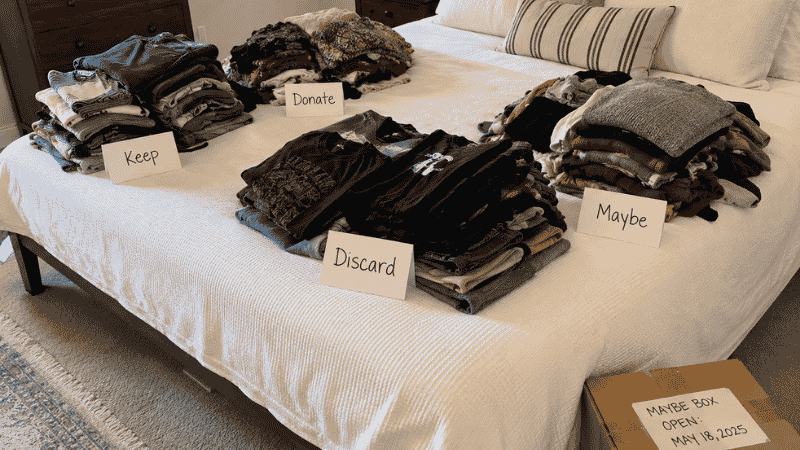
Clothing is where most decluttering projects stall — because clothing is where emotional attachment runs deepest. The dress from a memorable occasion. The jeans you’re planning to fit into again. The gifts you’ve never worn but feel guilty giving away.
The most useful reframe for clothing decisions:
Instead of asking “do I want to keep this?” — which triggers attachment and justification — ask: “If I were shopping right now and saw this on the rack, would I buy it at full price?”
That question bypasses the sunk cost attachment and forces you to evaluate the item for what it actually is, not what you spent on it or what it once meant.
For emotionally loaded items specifically:
You don’t have to decide right now. A “maybe box” — a box of items you’re not sure about, sealed and dated — is a legitimate tool. Put the uncertain items in, label the box with today’s date, and put it somewhere out of the way. If you haven’t opened the box or thought about a specific item within 3–6 months, you have your answer.
The practical process for clothing:
Empty the entire closet and all drawers onto the bed. Yes, all of it. Working with everything visible prevents the “out of sight, out of mind” items from escaping the process.
Sort into four piles:
- Keep — you wear it, it fits, you’d buy it again
- Donate/sell — good condition, someone else would use it
- Discard — worn out, broken, stained, not worth donating
- Maybe — genuinely uncertain (goes in the dated box)
Return only the Keep pile to the closet, organized by how often you wear things. The rest leaves the house within 48 hours — bags by the door, scheduled donation pickup, whatever makes it happen fastest. The longer donate bags sit in your space, the higher the chance things migrate back.
How to Declutter the Bedroom
The bedroom declutter is really two projects: the visible surfaces and the hidden storage (under bed, in drawers, in the closet). Do them separately — the closet is its own project covered above.
Surfaces first: Nightstands, dressers, any shelves. Apply the same principle as the bathroom — everything comes off, only what earns its place goes back. A bedroom surface should hold only items you use in the bedroom: a book, a lamp, a phone charger, maybe a glass of water. Everything else has a home elsewhere.
Drawers: Empty each drawer completely. Group like items. Discard duplicates and anything worn out. Return the rest with intention — every item in a specific spot, not just “back in the drawer.”
Under the bed: Pull everything out. This is often where things go to be forgotten. Sort it like everything else — keep what’s genuinely used (seasonal items in proper storage bags), discard the rest.
How to Declutter the Kitchen
The kitchen has the unique challenge of combining high-utility everyday items with a graveyard of impulse purchases, wedding gifts you never use, and the infamous “junk drawer.”
Start with the obvious discards:
- Expired pantry items (check dates — most people find items 1–3 years past their date)
- Broken appliances and tools
- Duplicates (do you need four spatulas? Two is probably the honest answer)
- Items for cooking styles you don’t actually do (the pasta maker used twice, the bread machine, the spiralizer)
The cabinet audit: Open every cabinet. Everything in a cabinet should be there because you use it regularly, not because you don’t know where else to put it. If you can’t remember the last time you used something, that’s your answer.
The junk drawer: Everyone has one. The goal isn’t to eliminate it — it’s to make it functional. Pull everything out, throw away obvious junk, consolidate duplicates (you need one roll of tape, not four), and return only things that genuinely belong in a kitchen junk drawer. Small bins or a drawer organizer keep it from reverting within weeks.
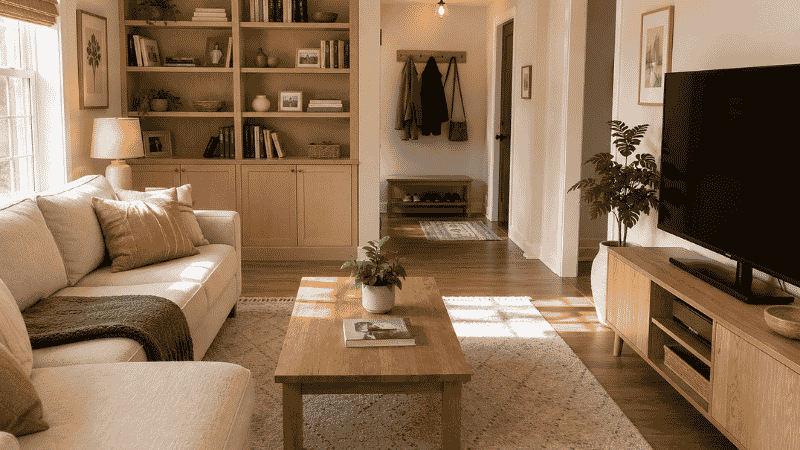
How to Get Rid of Clutter in the Living Room and Common Areas
Living rooms and common areas accumulate a specific type of clutter: things that came in and never got put away, decor that accumulated without intention, and items that live there because there’s nowhere else for them.
The “doesn’t belong here” sweep: Before deciding what to keep or discard, first remove everything that clearly belongs somewhere else. Books back to the bookshelf. Kids’ toys back to bedrooms or the playroom. Mail to the mail zone. This alone often makes a significant visual difference and clarifies what you’re actually working with.
Decor edit: This is a matter of personal preference, but a useful question: if you moved into this house today, with fresh eyes, would you choose this item? Decor that’s been in the same spot for 5+ years without you actively noticing and appreciating it has often become invisible — background noise rather than something you genuinely love.
How to Declutter Sentimental Items Without Guilt
This section is for the items that genuinely stop most people cold: the boxes of childhood things, the inherited items from family members who have passed, the collections from a former version of yourself.
The truth about sentimental items is that keeping everything is its own problem — when everything is saved, nothing is truly treasured. The items get buried in boxes, never seen, stored in conditions that damage them, and ultimately outlast any genuine emotional connection.
Some frameworks that help:
Keep the memory, not necessarily the object. A photograph of an item carries the memory without the storage requirement. This works especially well for large or fragile items.
Keep the best representative piece. If you have a box of your grandmother’s kitchen items, you don’t have to keep all of it to honor her. Keep the one or two pieces that most genuinely evoke her, use them, and let the rest find homes where they’ll actually be used.
Give yourself permission to change. Keeping something because you “should” want it isn’t the same as wanting it. You’re allowed to have outgrown a version of yourself, an interest, or even a relationship, and to let the physical objects from that chapter go.
The 3-month box method. For anything you’re genuinely unsure about, box it, date it, and put it away. If you don’t open it or think specifically about an item in 3 months, you have your answer.
How to Declutter Fast: The 20-Minute Emergency Method
Sometimes you don’t have a free Saturday. Sometimes guests are coming in two hours. Sometimes you just need to make a dent, right now, with whatever time you have.
The 20-minute rapid declutter:
Minute 1–5: Grab a trash bag. Walk through every room and collect only obvious garbage. No decisions, just trash.
Minute 5–12: Grab a laundry basket. Walk through every room and put anything that doesn’t belong in that room into the basket. Don’t sort it — just collect it.
Minute 12–18: Put the basket in one room (your bedroom works well). Close the door. What you’ve done is move the visual chaos out of the main living areas. It’s not solved, but it’s contained.
Minute 18–20: Clear one surface in the main area you care most about — the kitchen counter or the coffee table. Fully clear it.
This won’t declutter your home. But it will make your space immediately more functional and give you the mental clarity to keep going when you have more time.
Why Clutter Comes Back (And How to Stop It)
This is the part that turns a one-time declutter into a lasting change — and the part almost no guide takes seriously.
Clutter returns for two main reasons: inflow exceeds outflow, and there’s no maintenance habit.
Managing inflow:
The most effective thing you can do to prevent clutter from returning is to be more deliberate about what comes into your home in the first place. This doesn’t mean stopping all purchases — it means pausing before any non-essential item enters your space. The “one in, one out” principle (when something new comes in, something old goes out) keeps the volume stable without requiring ongoing willpower.
The maintenance habit that actually works:
A 10-minute weekly reset — one specific time each week where you return items to their homes, clear surfaces, and deal with anything that’s accumulated without a place — prevents the gradual accumulation that leads to another full declutter in six months. Ten minutes is short enough to actually do consistently. Consistently is the only thing that matters.
The monthly scan:
Once a month, do a quick pass through the spaces that accumulate fastest for you specifically — probably the kitchen counter, the bedroom floor, and one or two drawers. This catches the early signs of accumulation before they become a project.
Home Declutter Checklist (Room by Room)
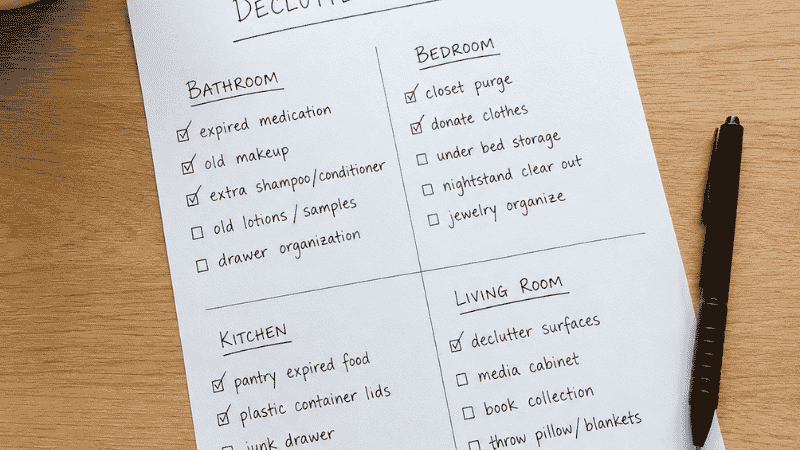
Use this as a starting point — not everything applies to every home, but it covers the most common accumulation zones.
Bathroom:
- Expired medications, skincare, and cosmetics
- Duplicate products (keep best, discard rest)
- Items not used in 3+ months
- Broken tools (hairdryers, straighteners)
- Hotel toiletries you’ve never actually used
Bedroom:
- Clothes not worn in 12 months
- Clothes that don’t fit currently
- Duplicate bedding beyond what you actually rotate
- Books you’ve finished and won’t reread
- Items that don’t belong in a bedroom
Kitchen:
- Expired pantry and freezer items
- Duplicate gadgets and tools
- Appliances used fewer than 3 times per year
- Mismatched containers without lids
- Takeout menus (just use your phone)
Living areas:
- Decor you don’t actively like
- Magazines and catalogs older than 3 months
- Electronics and cords for devices you no longer own
- Items that belong in other rooms
General:
- Anything broken with no plan to repair it
- Duplicates of anything
- Items kept purely from guilt
- “Someday” items with no specific someday
FAQ: How to Declutter Your Home
How do I start decluttering when I’m completely overwhelmed? Start with trash — just trash. Walk through every room with a garbage bag and remove only obvious garbage, no decisions required. Then set a 15-minute timer and clear one single surface. These two steps create momentum without triggering decision fatigue. The goal for day one isn’t a clean house. It’s just starting.
What room should I declutter first? The bathroom. It has the most objective criteria for keeping vs. discarding (expired, broken, unused), the fewest emotionally loaded items, and produces visible results quickly. Starting with an easy win builds the confidence and momentum to tackle harder rooms.
How do I declutter clothes I’m emotionally attached to? Ask “would I buy this at full price today?” instead of “do I want to keep this?” For genuinely uncertain items, use the 3-month box method — box them, date the box, and see whether you actually miss any specific item. Most people find they don’t open the box at all.
How do I declutter fast when I have no time? The 20-minute method: 5 minutes collecting trash, 7 minutes collecting misplaced items into a basket (not sorting, just collecting), 3 minutes containing that basket in a room you can close, 5 minutes clearing one main surface. This doesn’t solve the problem but makes the space functional and gives you a starting point.
How do I stop clutter from coming back after I declutter? Two habits: a 10-minute weekly reset to return items to their homes, and a “one in, one out” rule for new purchases. The reset prevents gradual accumulation. The one-in-one-out rule keeps overall volume stable without ongoing willpower.
How long does it take to declutter an entire home? For a typical 2–3 bedroom home with average accumulation, expect 20–30 hours of total decluttering time spread across multiple sessions. In practice, working in 15–45 minute sessions over several weeks is more sustainable than attempting it all at once — and produces better decisions because you’re not exhausted.
How do I declutter when my family won’t cooperate? Start with your own things only. Your clothes, your side of the bathroom, your items. Decluttering shared spaces without buy-in creates conflict; decluttering your own things creates visible change that often inspires others. And in the meantime, having control over your own spaces provides meaningful relief even when shared spaces are still chaotic.
Start Today — With Just a Trash Bag
If you’ve read this far and you’re still feeling overwhelmed, here’s the most important thing: you don’t have to feel ready. You just have to start small enough that readiness doesn’t matter.
Grab a trash bag. Walk through your home for 15 minutes. Collect only obvious garbage. That’s it. That’s the whole first step.
The rest follows. Not all at once, and not perfectly — but one small decision at a time, in the direction of a home that feels lighter.
Explore more on Vomoxs:
- How to Organize a Small Closet (Even If It’s Stuffed With Clothes)
- Small Space Storage Ideas: How to Organize a Small Apartment Room by Room
- How to Organize Kitchen Drawers (and Actually Keep Them That Way)
References
- Saxbe, D. E., & Repetti, R. (2010). No Place Like Home: Home Tours Correlate With Daily Patterns of Mood and Cortisol. Personality and Social Psychology Bulletin, 36(1), 71–81. UCLA research on household density and cortisol levels.
- Baumeister, R. F., Bratslavsky, E., Muraven, M., & Tice, D. M. (1998). Ego depletion: Is the active self a limited resource? Journal of Personality and Social Psychology, 74(5), 1252–1265. Research on decision fatigue and cognitive resource depletion.
- Roster, C. A., Ferrari, J. R., & Jurkat, M. P. (2016). The dark side of home: Assessing possession ‘clutter’ on subjective wellbeing. Journal of Environmental Psychology, 46, 32–41.
Category: Decluttering & Reset | Reading time: 11 min | Last updated: 2026