

You open the garage door and stand there for a moment. There are things in there you haven’t thought about in years. Garden tools leaning against sporting equipment leaning against holiday decorations. A box labeled “misc” from a move in 2019. Three folding chairs with nowhere specific to be. The workbench is covered with things that aren’t tools. You can’t see the floor on the left side.
You close the garage door.
This happens to an estimated 52% of Americans who have garages — they’re actively dissatisfied with how it’s organized, according to a 2022 CRAFTSMAN survey. And the most common reason isn’t laziness or lack of storage products. It’s that the garage became the designated home for everything that didn’t have a home anywhere else in the house. It accumulated gradually, one “I’ll deal with this later” at a time, until “later” became a project that feels genuinely impossible to start.
Here’s the thing: you don’t have to do it all at once. This guide breaks the garage into zones — each zone its own manageable project — so you can make real progress in an afternoon rather than needing an entire free weekend to feel like you accomplished anything.
Key Takeaways
- A 2022 CRAFTSMAN survey found that 52% of Americans with garages are unsatisfied with how their garage is organized — making the garage the most commonly neglected storage space in the home.
- The garage fails as a storage space not because of a lack of products but because it has no zone system — items accumulate wherever there’s physical space rather than in a logical, accessible location.
- Vertical space is the most underused resource in most garages. Wall-mounted systems, overhead storage, and pegboards can triple effective storage capacity without adding floor space.
- Hazardous materials — old paint, pesticides, pool chemicals, automotive fluids — require specific handling and cannot be organized the same way as general household items. Proper disposal is a safety issue, not just an aesthetic one.
- The most effective garage organization starts not with buying storage products but with a zone plan and a ruthless purge of items that don’t belong there.
Before Anything: The Garage-Specific Purge
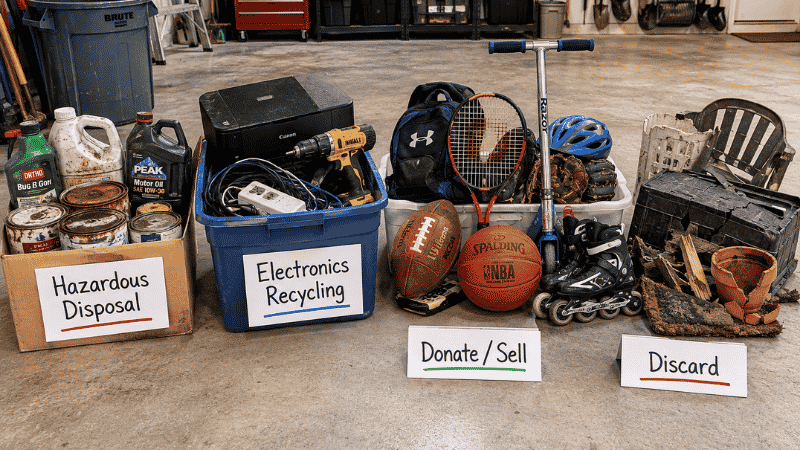
The garage purge is different from purging any other room in the house because garages collect a specific type of item that other rooms don’t: things that genuinely need to be disposed of rather than donated or kept. Old paint, expired chemicals, broken tools, deflated sports equipment, electronics from 2008 — a significant portion of what’s in most garages belongs neither in the house nor in a donation bin.
Before you sort a single item, identify and set aside:
Hazardous materials requiring special disposal: Old oil-based paint, pesticides, herbicides, pool chemicals, automotive fluids (motor oil, antifreeze, brake fluid), propane tanks, and lithium batteries cannot go in regular trash. They require a household hazardous waste (HHW) drop-off site. Call your local health department or municipality to find the nearest one before you start — having a plan for these items prevents them from ending up in the driveway indefinitely after the purge.
Electronics and appliances: Old computers, printers, televisions, power tools with dead batteries, and small appliances need electronics recycling, not landfill disposal. Many municipalities offer e-waste collection events; Best Buy and Staples accept many electronics for recycling.
Items that belong somewhere else entirely: A meaningful percentage of what lives in most garages doesn’t actually belong there. Tools that belong in a utility closet. Holiday decorations that should be in climate-controlled storage. Children’s items that outgrew the playroom and got moved to the garage as a holding zone. Identifying these items early prevents organizing the garage around things that don’t need to be there at all.
The actual purge: Once hazardous materials and misplaced items are separated, go through what remains with three designations: Keep (belongs in the garage and will be used), Donate or Sell (good condition, someone else can use it), Discard (worn out, broken beyond repair, no use to anyone).
The honest reality: most garages contain at least 20–30% of items that should be permanently removed rather than organized. Organizing around these items wastes storage capacity on things that don’t need to be there.
How to Organize a Garage: The Zone System
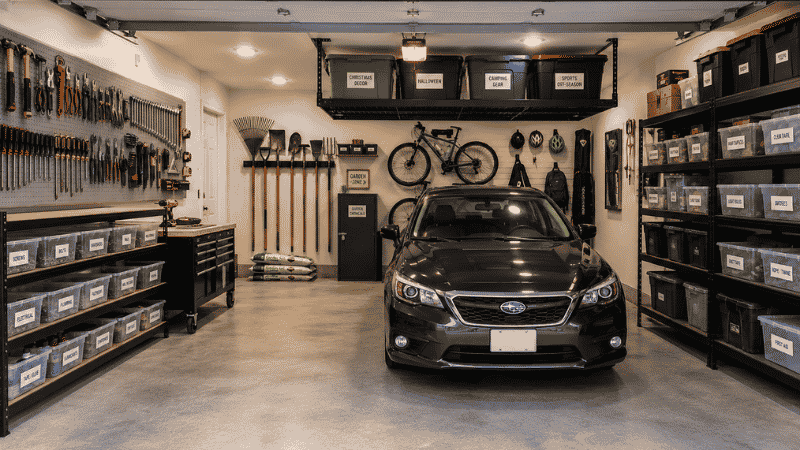
The zone system is what separates a garage that gets organized once and slowly reverts from one that stays functional for years. Every item in the garage belongs to a zone — a defined area based on how that category of item is used.
Map your zones on paper before moving anything. The sequence matters: zones that need frequent access go in the most accessible locations, seasonal or rarely-used items go in the least accessible spaces.
Zone 1: The Entry and Frequently Used Zone
This is the area immediately inside the garage door — the first 4–6 feet. Whatever you reach for most often should live here. Bikes if you ride regularly. Sports equipment in active rotation. The recycling bins. The items that go back and forth between house and car regularly.
This zone should have zero permanent storage of seasonal or rarely-accessed items. The entry zone works like a mudroom — high traffic, quick access, nothing that requires digging.
Storage tools for this zone: Hooks at varying heights for bikes, helmets, and bags. A slim shelving unit for items that stand on their own. Floor space for large items like strollers or bikes that can’t be wall-mounted.
Zone 2: The Tool and Workshop Zone
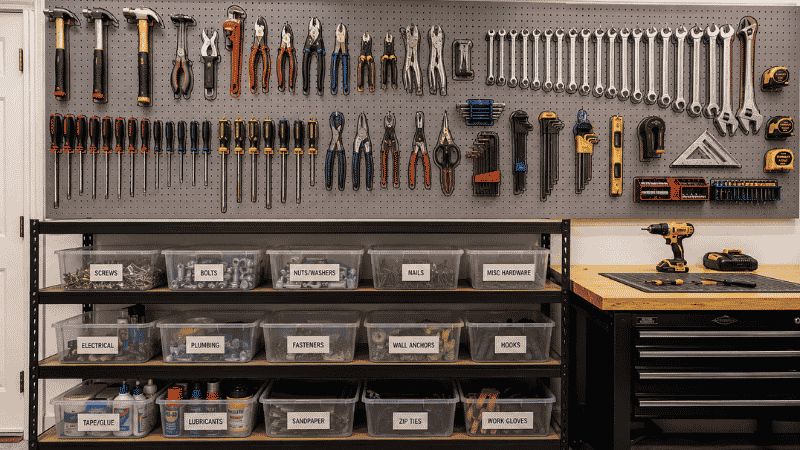
The area with the workbench, power tools, hand tools, and workshop supplies. This zone works best against a solid wall and benefits the most from pegboard organization.
Pegboard is the highest-impact, lowest-cost tool storage solution available. A 4×8 sheet of pegboard costs $30–$50 and holds an enormous variety of tools on adjustable hooks. The tools are visible, accessible, and each item has a defined home — which is exactly what most garage walls currently lack. Outline each tool with a marker so you can see at a glance what’s missing and where it returns.
Garage shelving ideas for the workshop zone: Heavy-duty metal shelving units (rated for 200–300 lbs per shelf) for power tools, paint cans, hardware bins. Label every shelf and every bin. Hardware specifically benefits from clear bins or small drawers so you can see contents without opening everything.
Small hardware organization: Screws, nails, nuts, bolts, and small hardware are the items most likely to become completely inaccessible without a system. Options in order of effectiveness: clear stackable drawer units with labeled drawers (highest organization, highest cost), labeled baby food jars or small mason jars screwed to a board through the lid (low cost, visible, surprisingly functional), divided bins sorted by size.
Zone 3: The Garden and Outdoor Zone

Long-handled tools — rakes, shovels, hoes, brooms — are among the most awkward things to store in a garage. When leaned against a wall, they fall over constantly. When piled together, the one you need is always the one at the back.
A wall-mounted tool rack (spring-loaded grips that hold tool handles vertically) holds 10–15 long-handled tools in a 3-foot wall section, keeps them individually accessible, and costs $30–$50. This is the single most impactful organizational change for garden tool chaos.
Potting supplies and soil: Heavy bags of soil, mulch, and fertilizer belong on the floor or on heavy-duty lower shelves, not on upper shelves where they’re hazardous to retrieve. Keep them near the garage door for easy in-and-out access on gardening days.
Chemical separation: Garden chemicals (pesticides, herbicides, fertilizers) must be stored separately from other garage items — ideally in a locked cabinet if children access the garage. They should never be stored near automotive chemicals or near food items if a refrigerator is in the garage.
Zone 4: Sports and Recreation Zone
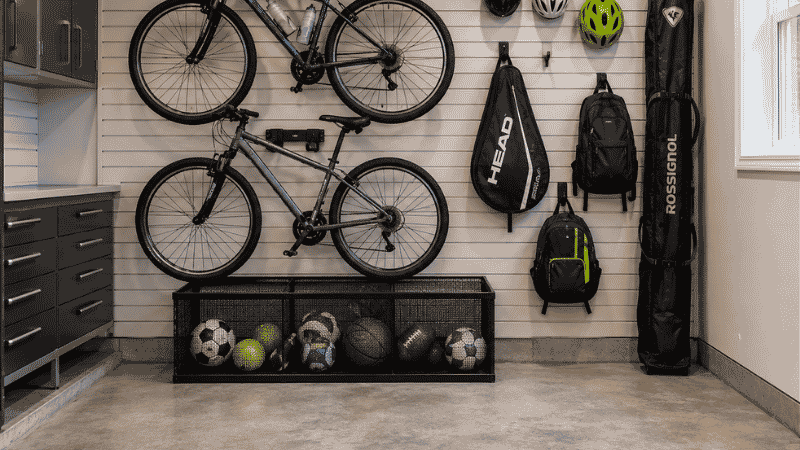
Sports equipment is among the most space-inefficient items to store in a garage — oddly shaped, bulky, seasonal, and constantly shifting as kids grow and interests change. The key is storage that accommodates the specific shapes involved rather than trying to force equipment into generic bins.
Bikes: Wall-mounted horizontal bike hooks (each bike on its own hook) take bikes completely off the floor and stack vertically for multiple bikes. A two-bike vertical mount takes 18 inches of wall space for both bikes combined. Bikes on the floor are tripping hazards and block access to everything behind them.
Balls: A rolling ball cart or a large mesh bin keeps balls contained, visible, and accessible. They don’t stack or file, so open containment works better than closed bins.
Seasonal sports equipment: Ski gear, camping equipment, and sports equipment used only part of the year belong in the overhead zone (see below) when not in season.
Zone 5: Seasonal Storage and Overhead Zone
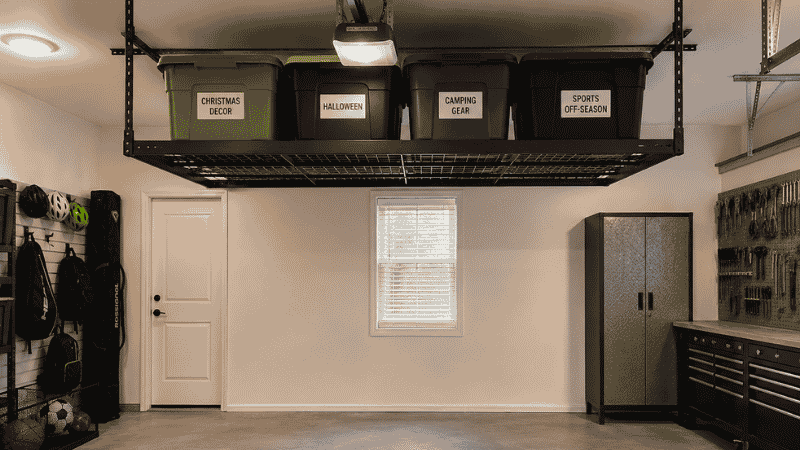
The ceiling of most garages is 8–10 feet high. The space between the top of the wall storage and the ceiling is the single most underused square footage in any garage. Overhead ceiling-mounted storage racks can hold 600–1,200 lbs of seasonal items — holiday decorations, camping gear, off-season sports equipment — in a space that currently holds nothing but air.
Ceiling-mounted overhead racks attach to the ceiling joists and hang 18–24 inches down, leaving clearance for the garage door. Items must be in clearly labeled, stackable bins to use this zone effectively — loose items in overhead storage become impossible to locate and retrieve.
What belongs in overhead storage: Items accessed fewer than 4 times per year. Holiday decorations by category (Christmas, Halloween, Thanksgiving, each in its own labeled bin). Off-season sporting equipment. Camping gear. Luggage and travel items.
What doesn’t belong in overhead storage: Anything heavy that requires two people to safely retrieve. Hazardous liquids (the risk of a container falling is too significant). Items you’ll need urgently — overhead storage requires a ladder and time.
Garage Storage Ideas by Wall Type
Wall-Mounted Shelving Systems
The most significant garage storage upgrade most homeowners can make is moving storage off the floor and onto walls. Floor storage blocks access, collects debris, and makes the garage feel smaller and more chaotic than it is.
Freestanding metal shelving units (the kind with adjustable shelves and 77-inch height) are the most cost-effective starting point for garage storage. A 5-shelf unit holds 600–1,000 lbs and costs $80–$150. Use one unit per zone for maximum clarity.
Track-and-bracket wall systems (like the Rubbermaid FastTrack or IKEA BOAXEL adapted for garage use) mount a horizontal rail to the wall studs and attach shelves, hooks, and bins to the rail. The advantage is full adjustability — the configuration can change as needs change without new holes in the wall. Higher cost, higher flexibility.
Slatwall panels provide similar adjustability to track systems and work well for tools, bikes, and accessories. The panel covers a larger wall area and accommodates a wider variety of hook and basket types than rail systems.
Garage Shelving Ideas for Small Garages
Small garages — one-car garages or those shared with other uses — require even more disciplined vertical thinking.
Go taller, not wider. A shelving unit that reaches 77 inches uses vertical space efficiently; a wider, shorter unit takes the same floor footprint but holds significantly less. In a small garage, every shelving unit should reach as close to ceiling height as safely usable.
Use the ceiling for bike storage. A ceiling-mounted bike pulley system hoists bikes completely vertical and against the ceiling — taking a bike that normally occupies a 6×2 foot floor footprint and reducing it to the ceiling space above that area. In a one-car garage, this can mean the difference between fitting and not fitting the car.
Fold-flat storage for rarely used bulky items. Folding tables, folding chairs, and collapsible ladders stored vertically on a wall mount take up almost no space when folded and are accessible when needed.
Why Garage Organization Always Seems to Fail
If you’ve organized the garage before — cleared everything out, set up new shelves, organized by category — and it returned to chaos within a year, it wasn’t a product failure.
Items accumulated without a zone assignment. When something new enters the garage without a designated zone, it goes to the most convenient available space, which is usually in front of something else. Over months, this creates layers of items where things at the back become permanently inaccessible. The fix is a zone system with physical boundaries, not just mental categories.
The garage became the default overflow space again. The hardest thing about maintaining a garage organization system isn’t the garage itself — it’s the rest of the house. Every time something in the house doesn’t have a home, the garage absorbs it. A consistent “nothing enters the garage without a zone assignment” rule, applied to every new item, is what prevents the gradual reaccumulation.
Seasonal items weren’t seasonally managed. Holiday decorations, sports equipment, and seasonal gear that don’t go in and out of active storage on a schedule pile up and mix with active-use items. A twice-yearly garage review — spring and fall — where seasonal items are rotated, active items are audited, and overhead storage is organized, is the maintenance habit that keeps the system working.
If You Only Have 10 Minutes Right Now
10 minutes: Walk through the garage with a box and collect only items that clearly don’t belong there — things that belong in the house, things that are obviously trash, empty boxes. Just those categories. Don’t make any other decisions. In most garages, this one step moves 10–20 items and creates visible space that makes the next session easier to start.
20 minutes: Pick one zone — the zone that causes the most daily friction — and move every item out of that zone that doesn’t belong there. Pile the displaced items to one side to sort later. The zone, now only containing items assigned to it, immediately becomes more functional.
45 minutes: Set up one shelving unit in the zone with the most floor-level clutter. Move items from floor to shelves. Label every shelf. A single organized shelving unit provides a reference point for how the rest of the garage can feel and creates the momentum to continue.
FAQ: How to Organize a Garage
How do I organize a garage when I don’t know where to start? Start with the hazardous materials — identify old paint, chemicals, and electronics that need special disposal and set them aside with a plan for removal. Then do a trash and obvious-discard pass with garbage bags. These two steps don’t require any organizational decisions and visually change the space enough to make next steps feel possible.
What is the best garage storage system? The best system is one built around your specific contents and how you use the garage. For most households, a combination of heavy-duty freestanding shelving (for general storage), pegboard (for tools), wall-mounted hooks and racks (for bikes and long-handled tools), and ceiling-mounted overhead storage (for seasonal items) covers every category. Track-and-bracket systems offer the most flexibility if your storage needs change frequently.
How do I organize a small garage? Prioritize vertical storage over floor storage in every decision. Ceiling-mounted bike storage, wall-mounted shelving reaching maximum height, and fold-flat storage for bulky items are the three highest-impact changes for small garages. Apply a strict zone system with physical limits — each zone has defined boundaries, and when a zone is full, something leaves before something new enters.
How do I organize a garage on a budget? The highest-value garage organization investments in order of cost-effectiveness: pegboard ($30–$50) for tool organization, a standard metal shelving unit ($80–$150) for general storage, a wall-mounted tool rack ($30–$50) for long-handled garden tools, and clear labeled bins ($15–$30) for categorizing contents of existing shelves. These four items together solve the most common garage organization problems for under $300 total.
What should I throw away when organizing my garage? Anything broken beyond reasonable repair. Duplicate tools (you need one of most tools, maybe two of the most-used). Items that belong in a hazardous waste facility — old paint, pesticides, automotive chemicals. Electronics and small appliances that no longer function. Sports equipment your children have outgrown. Items that have been in the garage for 3+ years without being accessed or thought about.
How do I keep a garage organized long term? Two habits: a “zone assignment before entry” rule (nothing enters the garage without a designated zone), and a twice-yearly seasonal review (spring and fall, rotate seasonal items, audit active zones, return any accumulated items to their zones). The review takes 2–3 hours twice a year and prevents the gradual accumulation that leads to another full reorganization.
How do I organize a garage with no walls (open or partially open garage)? Freestanding shelving units that don’t require wall attachment, rolling utility carts that can be repositioned, and heavy-duty plastic storage chests or deck boxes that are weatherproof can all be used in open or partially enclosed garage spaces. Overhead storage typically requires ceiling attachment, so options are more limited in truly open spaces.
Pick One Zone. Open the Garage Door This Weekend.
The garage doesn’t have to become a project that requires a free weekend and a full day of decision-making. Pick the one zone that causes the most daily friction — the area you navigate around every time you pull the car in, the place where you can never find what you’re looking for — and spend one afternoon just on that zone.
Move what doesn’t belong there. Add one shelving unit if the zone needs it. Label everything. Close the garage door.
That’s a complete, functional zone. Do the next one when you have another afternoon. The garage that actually works isn’t built in a single session — it’s built zone by zone, over the course of a few weekends, with a system that keeps it working long after the organizing is done.
Explore more on Vomoxs:
- How to Declutter Your Home: A Room-by-Room Guide
- Small Space Storage Ideas: How to Organize a Small Apartment Room by Room
- Pantry Organization Ideas: How to Organize Your Pantry So You Can Actually Find Everything
References
- CRAFTSMAN Brand (2022). 2022 CRAFTSMAN Garage Survey. Survey of American homeowners with garages on satisfaction with garage organization.
- Roster, C. A., Ferrari, J. R., & Jurkat, M. P. (2016). The dark side of home: Assessing possession ‘clutter’ on subjective wellbeing. Journal of Environmental Psychology, 46, 32–41.
- Saxbe, D. E., & Repetti, R. (2010). No Place Like Home: Home Tours Correlate With Daily Patterns of Mood and Cortisol. Personality and Social Psychology Bulletin, 36(1), 71–81.
Category: Room Organization | Reading time: 11 min | Last updated: 2026