
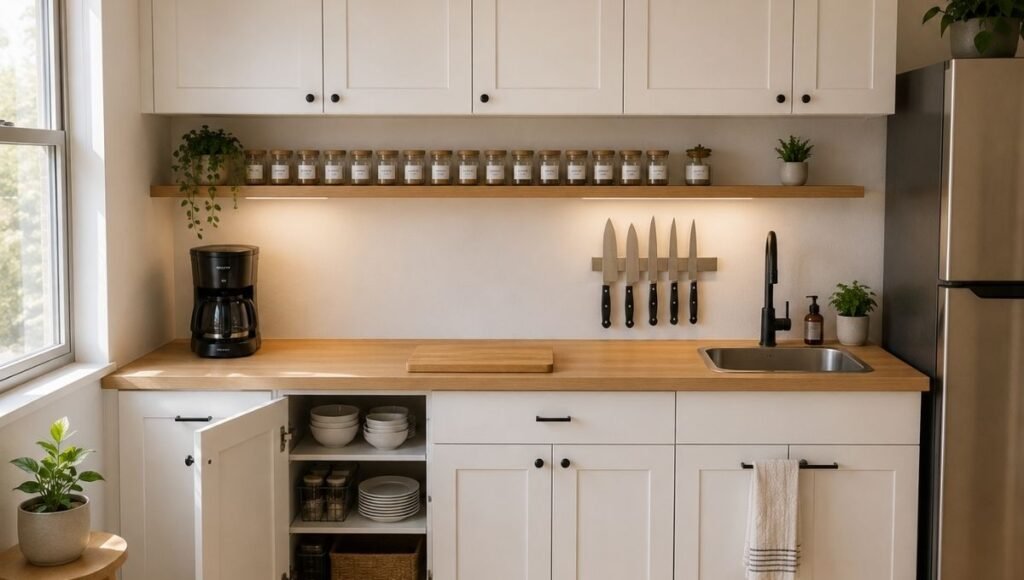
“I have too much counter space,” said no one who has ever lived in a small kitchen.
If you cook regularly in a kitchen under 100 square feet, you know the particular frustration of it: the cutting board has to go somewhere before you can open the refrigerator. The cabinet above the stove is full of things you can’t reach without a step stool. There’s one drawer that’s supposed to hold everything from spatulas to takeout menus to the mystery key you’ve been keeping just in case. The countertop is mostly appliances, and the small stretch of actual workspace left is where cooking has to happen.
Here’s what most small kitchen organization guides miss: the problem isn’t that you need more storage products. It’s that small kitchens require a fundamentally different philosophy than large ones. In a large kitchen, you can have multiples, keep specialty appliances permanently out, and store things wherever they fit. In a small kitchen, every item needs to earn its place, every surface has a specific purpose, and the organization system has to work around the physical reality of limited space — not fight against it.
This guide walks through every zone of a small kitchen — countertops, cabinets, drawers, the refrigerator, and the spaces most people overlook — with specific strategies for each.
Key Takeaways
- The average American kitchen contains significantly more equipment than most home cooks use regularly. A small kitchen audit that removes unused, duplicate, and rarely-used items typically recovers 25-40% of storage space before any organizational product is purchased.
- Counter space in a small kitchen should be treated as working space, not storage space — only items used daily and difficult to store elsewhere should live permanently on the counter.
- Vertical space is the most consistently underused resource in small kitchens. The wall above the counter, the inside of cabinet doors, and the space above the refrigerator are all usable storage zones that most small kitchens leave empty.
- A 2019 study in the Journal of Environmental Psychology found that cluttered kitchen environments are associated with higher stress levels and poorer food choices — an organized small kitchen isn’t just aesthetic, it actively affects how you cook and eat.
- The most effective small kitchen organization systems work with limited counter space rather than trying to create more — by reducing what needs to be accessible and improving the organization of what remains.
Step 1: The Small Kitchen Audit — Before Buying Anything
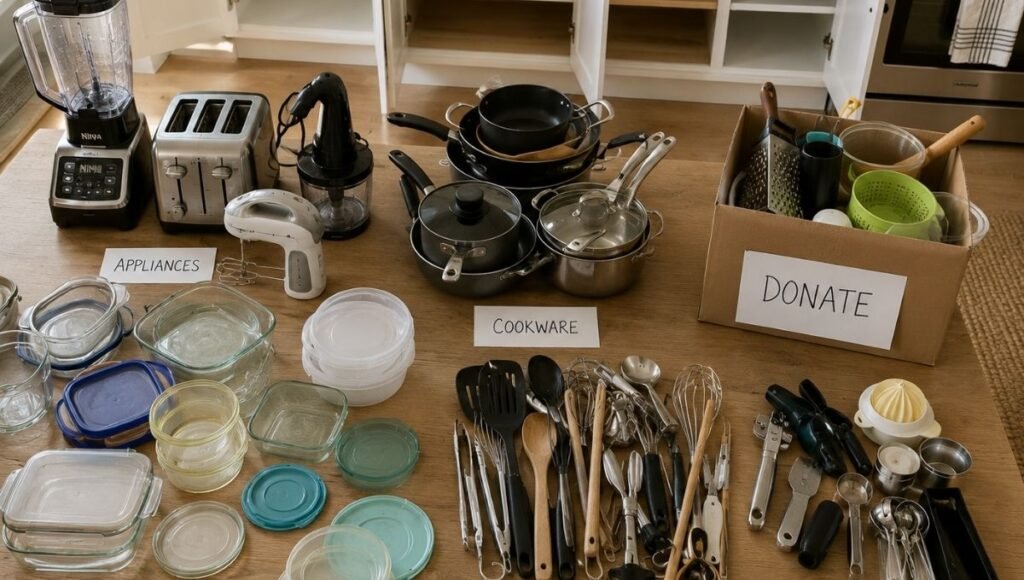
The single most impactful thing you can do in a small kitchen costs nothing and takes one afternoon. Pull everything out of every cabinet, drawer, and surface. Every pan, every appliance, every container, every utensil. Put it all on the kitchen table, the floor, wherever it fits. Then evaluate each category honestly.
Appliances: How many do you actually use in a given month? The stand mixer used twice a year doesn’t need to live on the counter or even in the kitchen. The rice cooker used weekly does. Appliances used seasonally or occasionally can live in a basement, closet, or pantry elsewhere in the home — retrieved when needed.
Cookware: The average home has 5-7 pots and pans actively used and several more stored “just in case.” For most cooking styles, 3-4 well-chosen pieces cover 90% of meals. Duplicates and rarely-used specialty pans take up disproportionate cabinet space.
Food storage containers: This is the category most likely to have multiplied uncontrollably. Lids that don’t match, containers from takeout that “might be useful,” sizes you never actually use. Keep only what you use and what has a matching lid. Everything else goes.
Utensils: The utensil crock or drawer is typically overpopulated. Most cooking requires fewer than 10 utensils regularly. The rest are there because they arrived and never left.
Editor’s note: The audit step feels tedious but it’s the most important one. In every small kitchen I’ve seen organized properly, the audit — not the products — is what created the space. You cannot organize your way out of a volume problem.
How to Organize a Small Kitchen: The Counter Rule
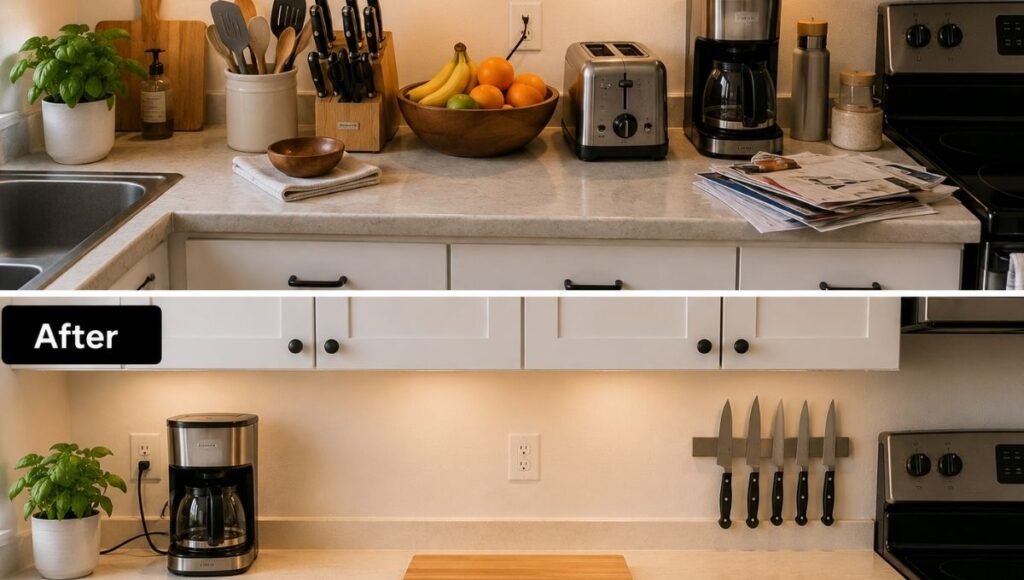
In a small kitchen, the counter is working space. Not storage space. Not display space. The place where food gets prepared.
This reframe is the most important mental shift in small kitchen organization. In a larger kitchen, counters have enough surface that appliances, a fruit bowl, a utensil crock, a knife block, and a coffee station can coexist without meaningfully reducing the working area. In a small kitchen, every item on the counter is directly competing with your ability to cook.
What earns counter space in a small kitchen: Items used every single day that are genuinely inconvenient to store inside a cabinet — the coffee maker if you use it every morning, the toaster if it’s used daily, a single cutting board that lives at the ready. That’s approximately the right number of permanent counter items for most small kitchens.
What doesn’t earn counter space: The stand mixer (store in a cabinet or pantry). The blender (store in a cabinet). The fruit bowl (put fruit in the refrigerator or a cabinet). The knife block (wall-mounted magnetic strip takes zero counter space). The dish rack (use a collapsible one that’s put away when not in use, or dry dishes and put them away immediately).
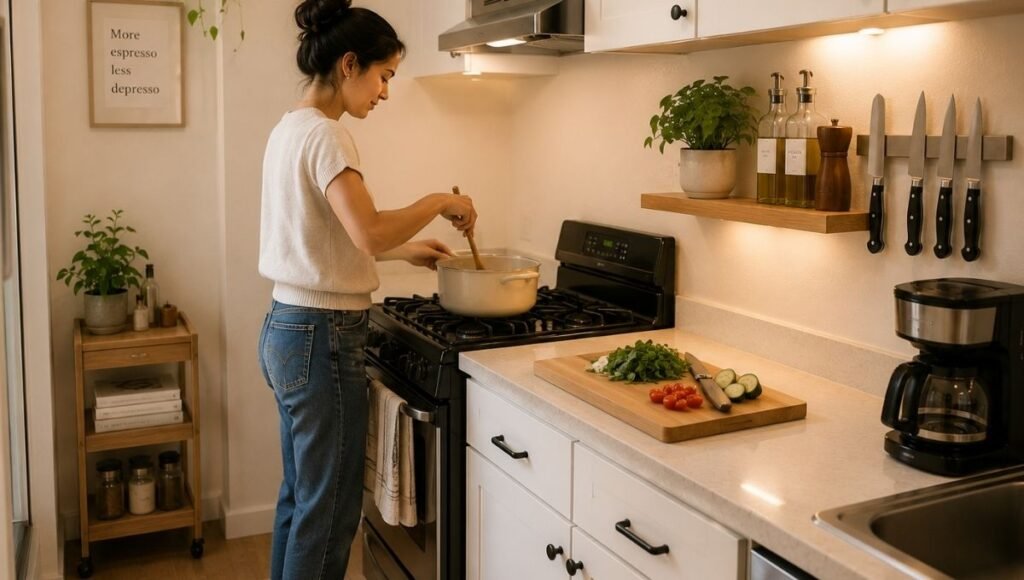
The magnetic knife strip: One of the highest-impact changes in a small kitchen. A magnetic knife strip mounted on the wall holds 5-8 knives in a fraction of the space a knife block uses, keeps knives immediately accessible, and frees significant counter real estate. Install it beside or above the cutting board for maximum workflow efficiency.
The appliance garage: For kitchens with a small section of deep counter against a wall, an appliance garage (a cabinet section with a roll-up door at counter level) hides the coffee maker and toaster behind a door, keeping them accessible while making the counter appear completely clear when not in use.
Kitchen Counter Organization: The Zone System
Even with a clear counter policy, small kitchen counters benefit from zone thinking — each area of the counter has a designated purpose and holds only items that serve that purpose.
Prep zone: The largest clear stretch of counter, designated for cutting, chopping, and assembling. Nothing lives here permanently. This is the zone that gets cleared when cooking starts.
Appliance zone: The one section where permanent appliances live — grouped together and kept to an absolute minimum. If two appliances share a zone, they share the plug too (a small power strip hidden behind them reduces visible cords).
Coffee/breakfast zone: If morning routines are a major kitchen use, a small dedicated section with coffee maker, a small container for coffee, and mugs can be semi-permanent — organized and bounded, not sprawling across the counter.
The zone system works because it creates a specific place for each counter category rather than letting everything compete for the same surface. When zones are defined, the prep zone stays clear almost automatically.
Small Kitchen Organization Ideas: The Overlooked Zones
The Space Above the Counter (Wall Storage)
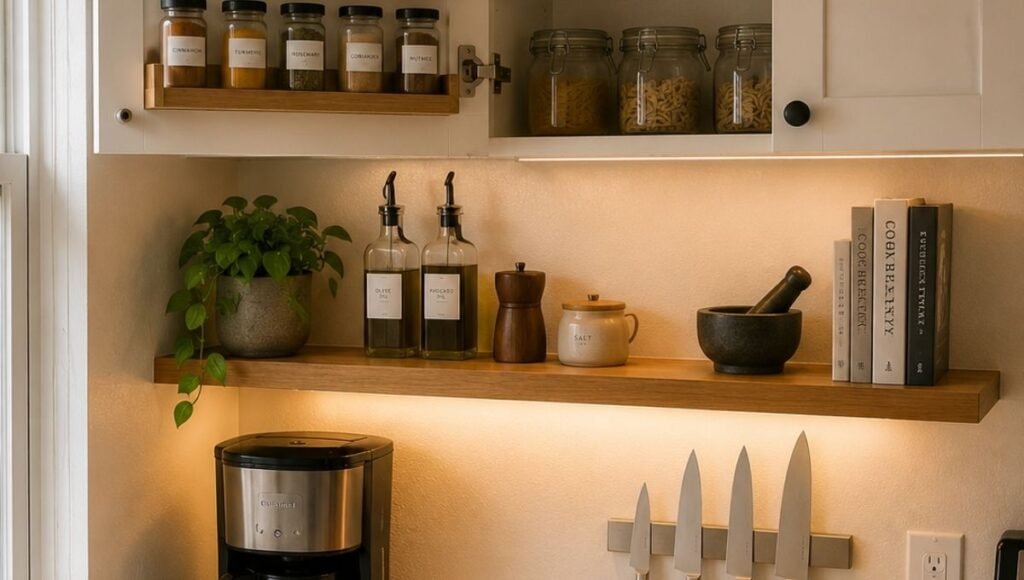
The wall above the kitchen counter — typically 18 inches between the counter and the upper cabinet — is almost never used in small kitchens. Adding a floating shelf in this space creates a complete additional storage tier without touching the counter footprint.
A single floating shelf holds frequently-used items that would otherwise need cabinet or counter space: oils and vinegars in a small row, a small herb garden, the coffee mug collection, the spice jars used most often. This shelf should be kept organized and intentional — not a catch-all, but a curated storage tier.
The Inside of Cabinet Doors
Every cabinet door in the kitchen is a usable storage surface. The inside of cabinet doors can hold:
- A mounted spice rack (holds 12-30 jars in space that was empty)
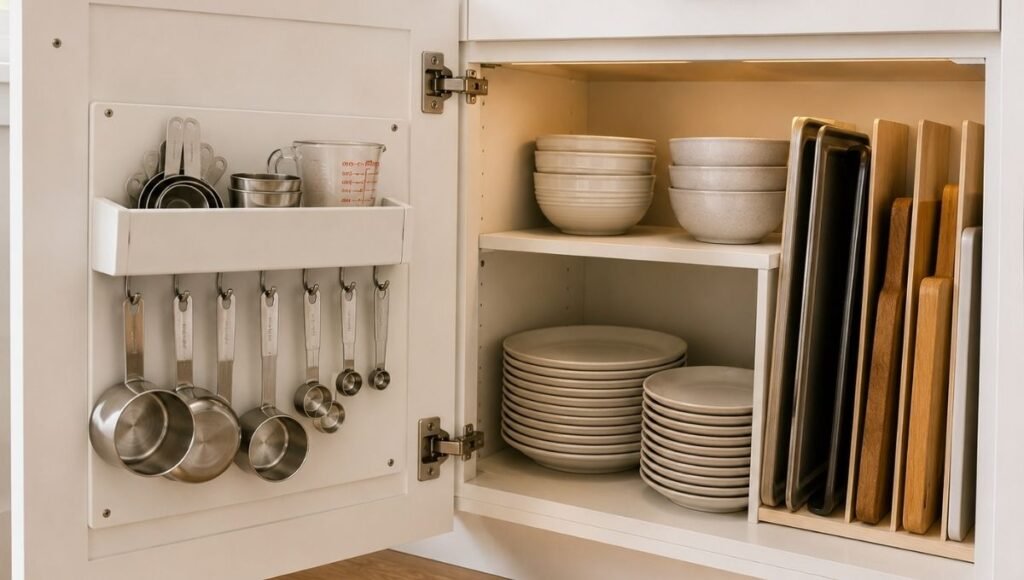
- Small hooks for measuring cups and spoons
- A mounted foil and wrap holder
- A notepad or small whiteboard for grocery lists
These additions require no renovation — adhesive-mounted or tension-based options work for renters and don’t damage cabinet surfaces.
The Space Above the Refrigerator
Most refrigerators have 12-18 inches of space above them that goes permanently unused. This is low-value storage (not easily accessible for daily use) but high-value for items used occasionally: small appliances used a few times a year, extra paper towels, bulk pantry backup items.
A simple shelf placed above the refrigerator, or two deep bins that fit the width, converts this dead space into usable storage for items that need a home but don’t need to be accessible daily.
Under the Sink
The cabinet under the kitchen sink is typically occupied by cleaning supplies, a garbage bag, and an accumulation of things that don’t have anywhere else to go. The space is awkward because of the pipe configuration, but it’s usable with the right approach — pull-out organizers designed to work around pipes, stackable bins on each side of the central pipe area, and over-door cleaning supply organization.
How to Organize Kitchen Counters When You Have Almost None
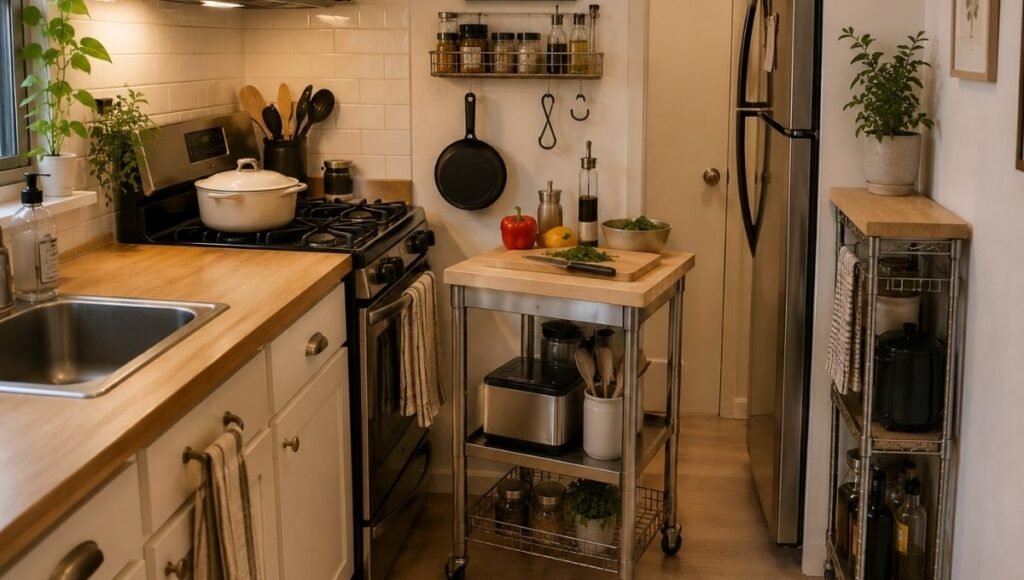
The absolute minimal counter space situation — a galley kitchen or studio kitchen where total counter space is under 6 square feet — requires a different set of solutions entirely.
A rolling kitchen cart adds a moveable counter surface that can be positioned where needed during cooking and moved elsewhere (or against a wall) when not in use. The cart also typically has shelving below for additional storage. This is the highest-impact single addition to a kitchen with almost no counter space.
A fold-down wall table creates a counter extension when needed and folds flush against the wall when not in use. Works in kitchens where one wall can accommodate the mount.
The one-pot cooking strategy: In an extremely small kitchen, the most effective organization isn’t about storage — it’s about meal planning. When counter space is genuinely minimal, planning meals that use one pot, one pan, or one baking dish at a time keeps the kitchen functional during cooking rather than requiring you to manage multiple simultaneous preparation zones. This isn’t a limitation; it’s a cooking style that works with the space rather than against it.
Kitchen Storage Ideas: Maximizing the Cabinets You Have
How to Organize Kitchen Cabinets in a Small Kitchen
Cabinet organization in a small kitchen follows the same frequency principle as every other space: the things you reach for every day go at the most accessible location (eye level, front of shelf), and everything else goes further back or higher up.
The stacking problem: Most kitchen cabinets waste significant vertical space because items aren’t stacked efficiently. A shelf riser inside a cabinet creates two usable levels within one shelf space — plates on one level, bowls on the riser above, all simultaneously accessible.
Bakeware and trays: Sheet pans, cutting boards, and large flat items are among the hardest things to store in small kitchen cabinets because they don’t stack well with other items. A vertical file organizer (a simple wire rack designed to hold files, used for pans and trays instead) stores 4-6 flat items vertically in a single cabinet section, making each individually accessible without disturbing the others.
The cabinet above the refrigerator: This cabinet, if your kitchen has one, is the hardest to access in the kitchen — requiring a step stool for most people. It’s the right place for seasonal or rarely-used items: the large roasting pan used at Thanksgiving, the fondue set from a previous decade, the waffle iron used twice a year. Not for daily items.
Kitchen Drawer Organization
Small kitchen drawers without dividers become immediate chaos zones — every small item mixed with every other small item. A simple expandable drawer divider creates dedicated compartments for each utensil category and prevents the mixing that makes everything hard to find.
The one-drawer-one-category rule: Each drawer holds one category of kitchen items. Utensils in one drawer. Dish towels and cloths in one drawer. Gadgets and small tools in one drawer. When categories mix in small kitchens, the drawers become effectively non-functional — the item you need is always at the bottom.
For a more complete guide to kitchen drawer organization: → How to Organize Kitchen Drawers (and Actually Keep Them That Way)
Why Small Kitchen Organization Fails
If you’ve organized a small kitchen before and it reverted to chaos within weeks, it was almost certainly one of these:
The volume problem wasn’t addressed. Adding new organizers to a kitchen with too many items creates organized chaos rather than functional storage. The audit step — removing what doesn’t belong, what isn’t used, what is duplicated — is the prerequisite that can’t be skipped.
The counter rule wasn’t maintained. A cleared counter that becomes a landing zone for incoming items within a week indicates that incoming items don’t have a designated home. The counter becomes the default because it’s the easiest available surface. Fixing this requires creating homes for the items that keep landing there — not willpower.
The organization required too many steps to maintain. A pot that requires removing three other items to access will eventually end up on the counter rather than in the cabinet. Every storage decision should make the organized choice easier than the disorganized one.
If You Only Have 10 Minutes Right Now
10 minutes: Clear the kitchen counter completely. Everything off. Wipe the surface. Put back only items used every single day. Put everything else somewhere — a cabinet, a box, the floor temporarily. Live with a clear counter for one week and see which items you actually needed to retrieve from their temporary home. Those are the items that might earn counter space back. Everything you didn’t retrieve can probably find a permanent home elsewhere.
20 minutes: Do the utensil audit. Pull every utensil out of every crock, jar, and drawer. Keep what you’ve actually used in the past month. Set aside everything else. The kept items go back in one organized location; the rest gets donated or stored elsewhere.
30 minutes: Install a magnetic knife strip if you have a knife block on the counter. This single change frees the footprint of the knife block and improves knife access. Mount it on the wall beside or above the cutting area — it takes 30 minutes and $20-40 and immediately returns meaningful counter space.
FAQ: How to Organize a Small Kitchen
How do I organize a small kitchen with no counter space? Add a rolling kitchen cart for moveable counter space. Apply the counter rule strictly — only daily-use items that are genuinely inconvenient to store elsewhere stay permanently on the counter. Mount a magnetic knife strip on the wall to remove the knife block. Use a collapsible dish rack that stores vertically when not in use. A wall-mounted fold-down table creates additional prep surface when needed.
What should not be stored on a kitchen counter? Anything not used daily. Stand mixers, blenders, food processors, specialty appliances — these earn cabinet or pantry space, not counter space. Fruit bowls (produce except bananas does better refrigerated). Knife blocks (magnetic strip on the wall is more space-efficient). Utensil crocks if there’s a drawer available for the same items.
How do I maximize kitchen cabinet space? Add shelf risers inside cabinets to create two usable levels per shelf. Use a vertical file organizer for baking sheets and cutting boards. Store items by frequency of use — daily items at eye level and front of shelf, occasional items higher or further back. Add over-door organizers on every cabinet door. Use the cabinet above the refrigerator for rarely-used items.
What is the best way to organize a galley kitchen? Zone the counter into a prep area, a small appliance area, and a cleanup area even within limited space. Mount storage on every available wall surface — magnetic knife strip, floating shelf between counter and upper cabinets, hooks for frequently-used tools. Keep the prep zone clear at all times. Consider a rolling cart that can extend the counter during cooking and move aside when not needed.
How do I keep a small kitchen organized long term? The counter rule is the maintenance system: nothing stays on the counter that isn’t used daily. A weekly 10-minute kitchen reset — returning items to their homes, wiping surfaces, checking for accumulated items that don’t belong — prevents the gradual drift. The most important maintenance habit is dealing with incoming items immediately — when something new comes into the kitchen, it gets a home before it sits on the counter.
Start With the Counter
The small kitchen doesn’t need a renovation, a new set of matching canisters, or a weekend of reorganization. It needs one clear surface and a commitment to keeping it that way.
Clear the counter today. Every item, off. Wipe it down. Put back only what’s used daily. See what the kitchen feels like with working space restored.
That one change — the counter clear and maintained — makes every other small kitchen strategy more effective and more sustainable.
Explore more kitchen organization on Vomoxs:
- How to Organize Kitchen Drawers: A Zone-Based System
- How to Organize Kitchen Cabinets: Step-by-Step Guide
- Pantry Organization Ideas: How to Organize Your Pantry
- How to Organize Your Fridge: A Zone-by-Zone System
- Spice Rack Ideas: How to Organize Spices and Pots
References
- Roster, C. A., Ferrari, J. R., & Jurkat, M. P. (2016). The dark side of home: Assessing possession ‘clutter’ on subjective wellbeing. Journal of Environmental Psychology, 46, 32–41.
- Vartanian, L. R., Kernan, K. M., & Wansink, B. (2017). Clutter, Chaos, and Overconsumption: The Role of Mind-Set in Stressful and Chaotic Food Environments. Environment and Behavior, 49(2), 215–223. Research on kitchen environment and food choices.
- Saxbe, D. E., & Repetti, R. (2010). No Place Like Home: Home Tours Correlate With Daily Patterns of Mood and Cortisol. Personality and Social Psychology Bulletin, 36(1), 71–81.
Category: Room Organization | Reading time: 10 min | Last updated: 2026